Posted in Books, LGBT, romance, Young Adult

Book Review: Simon vs. the Homo Sapiens Agenda

Remember your first crush?

Remember walking down the corridors of your high school and blushing whenever you catch a glimpse of that one cute guy who seems to shine just a little bit brighter than everyone else?

Remember the late night conversations with your friends trying to decipher and construe every conversation and gesture, looking for any hidden meaning or indication that he feels the same way?

Remember your first heartbreak, like when you find out he likes someone else and you comfort yourself with a tub of rocky road ice cream and listen to emo music (Jann Arden in my case)?

These are the kind of memories that this book evokes. It takes you back to a time in your life when every feeling and emotion is magnified (probably because of teenage hormones). It recalls the innocence of first love and I think it captures it perfectly, with just the right amount of self-deprecating humour, sweetness and angst. 

But you know what the most beautiful thing about this book is?

Its about two teenage boys falling in love for the first time. I am really happy to be living in a time where books like this can be published and widely read, not just by the lgbt community but by mainstream readers as well. I think that ten years ago, a kid growing up confused about his sexuality would have felt alone and depressed whereas I fervently hope that now, with all the support and books like Simon, they would know that there are other people going through the same thing and that it DOES get better.

I love Simon’s internal monologue, I really like getting into his head and seeing his take on things. I love that he is a huge fan of Harry Potter and I love that he does theatre. I love the fact that he thinks “coming out” shouldn’t be exclusive to gay people and that straight people should come out as straight too. I love that he thinks straight shouldn’t be the default setting and I love that he was able to bring a sense of humour to his own eventual coming out. 

I know that coming out is a really serious issue for teens, and I’ve read several books where this hasn’t turned out well. But, spoiler alert, its great to read a book for once where family and friends really rally around the character in order to give him support. It gives you hope that that kind of tolerance will eventually be the norm. Love is love people, get with the program.

There’s a mystery to be solved here and if you guys are anything like me, you’ll be tempted to just read through the end to find out who “Blue” is but trust me, you don’t want to spoil the experience. I honestly guessed it early on but I kept getting thrown by the red herrings. However, just like when I’m reading crime and mystery, I know that its rarely the obvious suspect whodunit because where’s the fun in that? And also if you’re really observant, Blue gives himself away in one of his emails to Simon. 

Anyway, if it was possible to die from sweetness overload, I would have keeled over last night. I finished the book and just went “awwwww“. It kinda makes me miss high school, although I wouldn’t go so far as to wish to go through adolescence again. If you’re looking for a nice and easy read, add this to your to-read list! I guarantee you won’t regret it. 

Posted in Books, Religion, Reviews

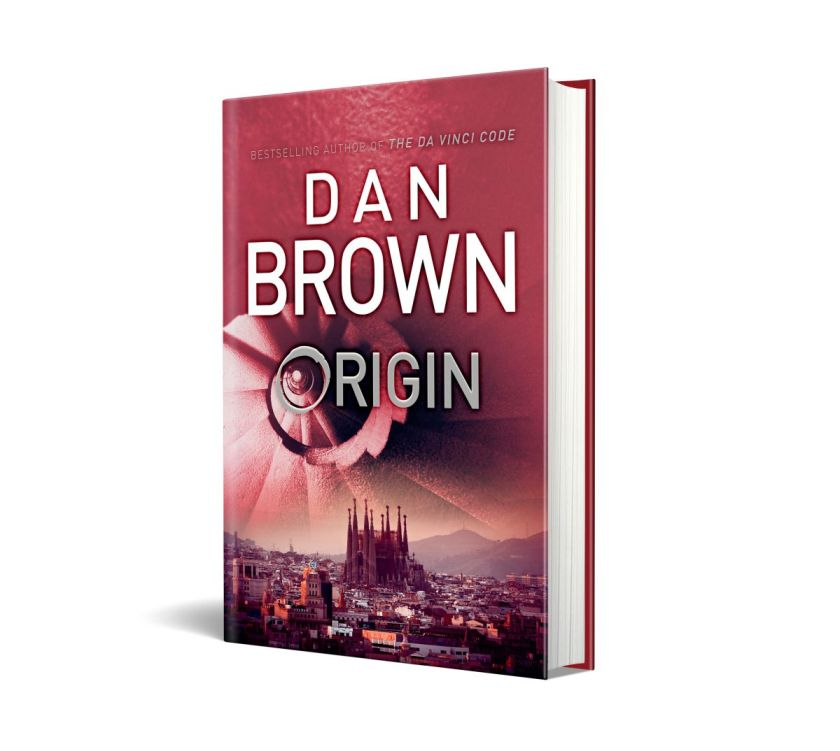
Book Review: Origin – Dan Brown

It’s weirdly fitting that I finished and am reviewing this book on Sunday, a day known to Christians the world over as the day of the Lord.


The premise of the book is quite simple and a little bit formulaic in my opinion. But hey, if it ain’t broke don’t fix it right? Dan Brown has sold millions of copies of these Robert Langdon books that he should know by now that if you just stick to the plan, you’re good.


As per usual Robert Langdon is invited to an event, this time by his former student, Edmond Kirsch, an influential man who is renowned in the scientific world as a pioneer and a prophet. Edmond has promised to reveal a groundbreaking research that will rock the very foundation of religious belief. However, things take a sinister turn before he can do so and it is up to Robert, and inevitably a female companion, to search through the clues left by this enigmatic man so that his final discovery can be broadcasted to the world, facing challenges and threats to their existence along the way of course.


I’m not kidding when I say these books are formulaic: European city as a setting (Barcelona), art (Gaudi) the usual anti-religion tirade, symbols and clues, plot twists, heck, Robert’s female sidekick this time around – Ambra Vidal – is made out of the same mold as Vittoria, Sophie and that girl from Inferno (although we were spared the romantic undertones this time around, thank God. I don’t think Tom Hanks can handle any more romantic entanglements.)


There are so many themes to explore that I think I’ll just dive right into it. There will be minor spoilers along the way, although I’ll try to keep them to a minimum and readers will still get to enjoy the element of surprise brought about by a good plot twist, although I saw this one coming from a mile away.

Where did we come from?

This is the question that divides religion and science. Despite attempts to unify them and despite calls for us to see the hand of God behind scientific advancements, it seems like they can’t bridge the big divide of the question of where man came from. Of course, everyone is familiar with the story of Genesis and God creating Adam and Eve from his own likeness. Equally familiar is Charles Darwin’s theory of evolution: man’s journey from homo Habilis to Homo sapiens brought about by the survival instinct.

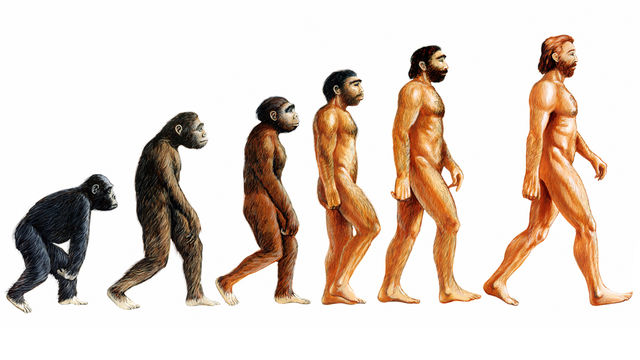
 

garden-of-eden-fall-of-manevolution-in-motion


One of our more enterprising teachers attempted to begin an intelligent and stimulating dialogue back when I was in high school by having us students debate these two theories. I think she greatly underestimated how fervent some people’s religious beliefs are and that some of the students will take things personally. Religion is a deeply personal thing. It forms a major part of your entire belief system and influences how you see and interpret the world. For most of us, religion is learned from a loved one and part of what keeps us believing in it is the influence of that loved one. For example, I may not necessarily have as strong a faith as I did when I was younger and I have come to believe that there is a big flaw in my belief system, but I still go to church every Sunday out of fear of disappointing my mum, who is deeply religious.


Anyway, the debate ended in fights and tears especially on the side of those who were for Creationism. I think someone did raise the question about whether you would prefer to believe you evolved from a chimpanzee or whether you’d rather believe you were a special creation of a divine being. This was over 15 years ago so I’ve forgotten which side I was on but I distinctly remember being able to see and understand both sides of the story and my eventual take on it is that we should all stop asking this inane question and just move on with our lives.

I mean, does it really matter where we came from? Shouldn’t it be enough that we exist and therefore should make that existence meaningful? So many debates raging and wars being waged over a pointless question. I agree with what one character in this book said, no matter what scientific discoveries people come up with, people will still cling to their faith because at the end of the day, everyone needs to believe in a higher power.


Religion versus Science

Religion is intangible. The bible itself praises people who “do not see and yet choose to believe”. Christianity requires a leap of faith and – paradoxically -a suspension of belief. We believe in a God who loves us so much that He gave us his only son, birthed through divine conception. This son, Jesus, then gave up his life on the cross to save us from our sins and was resurrected three days after and brought into heaven. Those are two of the mysteries of our faith that we’ve chosen to base our entire belief system on.

A scientific mind will just lose the plot when faced with this belief system because it just. doesn’t. make. any. sense. I agree. Its got plot holes the size of the hole on the ozone layer. The entire system can be destroyed by a few questions and all we’re inevitably left with is our faith. Science, and the scientific method, meanwhile is based on facts and experiments. Its based on research and results that are tangible and reproducible. So when scientists discover something that directly contradicts religion, it’s a big deal because you know they will be armed with facts to back up their claims, like the theory of evolution.

I don’t know, really. I don’t understand the war between religion and science because I think there’s room for both to co-exist in the world. I think the world needs both in equal amounts. Take medicine, for example. I am both a Catholic and a medical personnel and I am able to reconcile both my faith and my medical knowledge when I deal with my patients. When a family member is sick, I find myself both recommending drugs and treatment that I think will help and keeping them in my prayers. When I found out my dad had high PSA levels (one of the indicators of prostate cancer) I spent one day researching all there is to know about it and then spent the night praying the rosary. I don’t see the disparity or the divide.

I remember being deeply offended one day when a surgeon I was working with said that religion is for the weak. I disagree. Yes, from a certain narrow-minded perspective it may seem as if some people use religion as a crutch because they can’t bear to take responsibility for their own destinies. But equally, there is something beautiful about how it is also used as a moral compass to temper man’s often irresponsible foray into things he’s not ready for.


Where are we going?

During his big reveal, Edmond said that the question of where we came from is not as important as where he thought we were going. I am heading into spoiler territory so do stop reading if you’ve not read the book yet. Although I think this won’t change your reading experience, I have to post an obligatory

SPOILER ALERT!!!!

Anyway, apparently Edmond’s experiments and his work on a super-computer has allowed him to predict man’s future and he predicts that in 50 or so years, man as we know it would be extinct and a whole new race will take over. According to Edmond technology will eventually consume man, pacing the way for a “new and better race of human beings”.

Now, this is clearly Dan Brown’s way of admonishing the current society’s obsession with technology and its true, in a way. Everything we need, we can access at the touch of our fingers. Need information? Find it on google. Need directions? Use the maps on your phone. Need to tell the world something new about yourself? Post a status on Facebook. Need to contact your mum from halfway around the world? Call her on FaceTime. Bombs can now be triggered remotely. There is a theory that we are entering a new dawn where technological warfare will replace traditional warfare. The advancement of technology can now be measured in terms of years instead of decades. Apple comes up with a newer, bigger, better and more advanced smart phone every year and it needs to do so in order to stay one step ahead of its competitors.

In a sense, the world is moving too fast that this plot twist really didn’t surprise me as much. One thing I found really clever is that, if you really pay attention, the book’s narrative and action was really in keeping with this theme of technology taking over. For example, Robert Langdon I felt played less of a role here because he had someone (or something) else doing the work for him (you’ll notice this if you read the book). Even the central mystery being solved was in keeping with this theme.


Despite that, it’s still the little things…

I was quite ready to give this book a negative review. I found it to be too long and I never really engaged with the story the way I did with what I still argue is Dan Brown’s best work (Angels and Demons). However, it was the little pockets of human interaction amidst all the chaos and startling new ideas that really turned the tide for me: a father’s love for his son, a son’s wish to live up to his father’s expectations, the thrill of falling in love and the purest love between two people who were destined to never share their feelings to the world because their world is not ready for it yet. But there is hope that one day it will be.

Again, I don’t know if this contrast was intentional but I, for one, found it really poignant. It’s in keeping with the message of the book I guess, that the human capacity for tolerance and compassion will keep us from being overrun by the dangers of powerful technology and that is what keeps Edmond Kirsch hopeful about the future.


….and finally.

I know this is a pretty long review, I apologise but it is a rather long book (again, this is one of my major complaints about this. Find a better editor, Danny boy!) but it’s certainly worth reading, especially if you’ve been a fan all these years.

My advice is to take everything with a pinch of salt. Ultimately, it doesn’t matter what other people tell you anyway. You believe what you believe and you are entitled to that. Live and let live, people.


Happy Sunday, blabbaholics and bookworms alike!


Posted in Books, Fantasy, Paranormal, Young Adult

Book Review: The Mortal Instruments Series – Cassandra Clare

I’ve been on Goodreads long enough to know that one of its golden rules is that thou shall never judge a book by another member’s review. Although I sometimes make the decision to read or not read a book based on the community’s rating/s, I try not to be put off by negative reviews,  especially if a book’s blurb sounds particularly interesting.

There are a lot of negative things about Cassandra Clare on the internet. Apparently, she was involved in some scandal a few years ago because of a Draco Malfoy fanfiction plagiarism accusation which led her to be banned from a fanfiction website. I’m not too clear on the details, but allegedly, huge parts of ‘City of Bones’ is lifted off the material in question so people were outraged when it went on to sell millions (plus movie and television adaptations). 

I personally don’t understand why she’s being singled out for something that seems like common practice to me (I’m looking at you EL James). I am not trying to defend plagiarism, I think there’s nothing worse than an author trying to pass off plagiarised content as original material. But take 50 shades of Grey for example. That started out as Twilight fanfiction didn’t it? The similarities were painfully obvious; if you take away the BDSM and add the sparkly vampire element, the basic structure of both series is the same. It still made EL James a household name (and suddenly made it acceptable to be reading about S and M). 

I can see why people would think that The Mortal Instrument series is some kind of fanfiction for Harry Potter. 

1. Valentine Morgenstern – obsessed with the purity of Nephilim bloodlines is almost a reincarnation of Voldemort

2. The Circle – Valentine’s followers who repented and renounced him when he presumably died is the nephilim equivalent of the Death Eaters

3. Mundanes – the Nephilim’s term for the human race. Mundanes = Muggles?

4. Jace Wayland – I personally find it hard to believe that he’s based on Draco Malfoy. I think he’s much more developed as a character. Physically, okay, he’s also got blond hair but that’s it. Or is Jace meant to be Harry Potter? 

Actually, the further on that the book series progressed, the less I felt like I was reading fanfiction. Its unfair to think that one author is copying off another simply because there are similarities. I think its hard to come up with a truly original concept in fantasy fiction. You inevitably come across a variation of a theme that’s already been explored in some other book. That doesn’t mean that the author doesn’t deserve some credit for the book itself if the book happens to be GOOD.

I fully agree that Cassandra should just own up to her shady past, because the truth is, these books are absolutely brilliant. They don’t deserve all the negativity surrounding them because they actually contain original content, in my own humble opinion. In addition, if I think about all the things that make a fantasy series great, I find that a lot of those things can be found in these series and more besides.

1. World Building – I think Cassandra Clare did such a good job of building the Shadow World, especially with regards to the history of the shadowhunters, family legacies, notable Downworlders (vampires, werewolves and warlocks), immortals who have directly or indirectly affected current events. There’s even a tie-in to the prequel series (which I’m only just starting to read).

2. The idea that no matter how different we are, we are all the same and we need each other so that good triumphs over evil. I am a sucker for these kind of storylines. 

3. A hero’s journey – Clary Fray and Jace Wayland both literally go to hell and back to triumph over evil and they discovered a lot of things about themselves along the way.

4. No one is born good or evil. It all comes down to choice. You see this a lot in fantasy series and there’s a reason for that. I believe that the things that happen to you don’t shape who you are, its the choices and decisions you make that make you who you are.

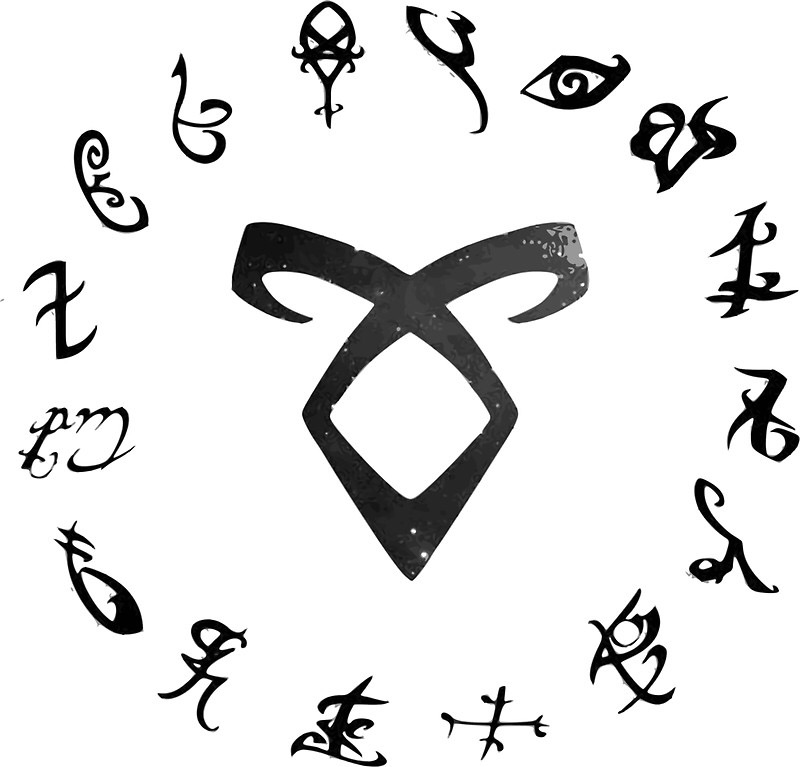
5. Runes tattooed onto a shadowhunter’s body that serves as a source of power.

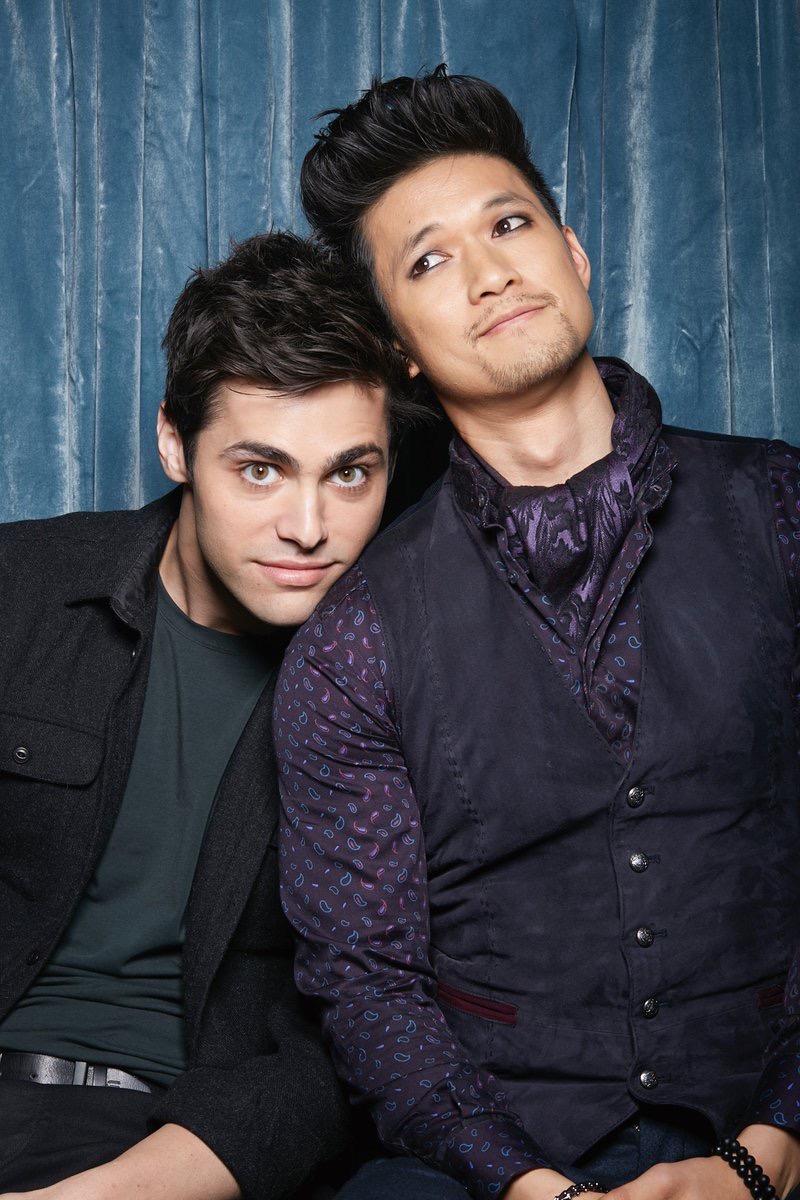
6. Alec Lightwood and Magnus Bane. Enough said. These two should have their own series.

7. Simon Lewis, an ordinary mundane who got sucked into the shadow world just because he’s in love with his best friend Clary, and ended up playing a more vital role than anyone could have predicted.

8. Plot twists and secret histories. I love love love plot twists. I think some of tbe plot twists in the. book should have been explored more in the tv series but I supposed when you’re uncertain about whether its gonna be picked up for another season you should cram as much in one season as you can and leave off some of the other plot devices. But I hope there’s a flashback episode somewhere in the Shadow Hunter tv series future.

9. The Silent Brothers. They turn out to be so much more intriguing than I thought they were.

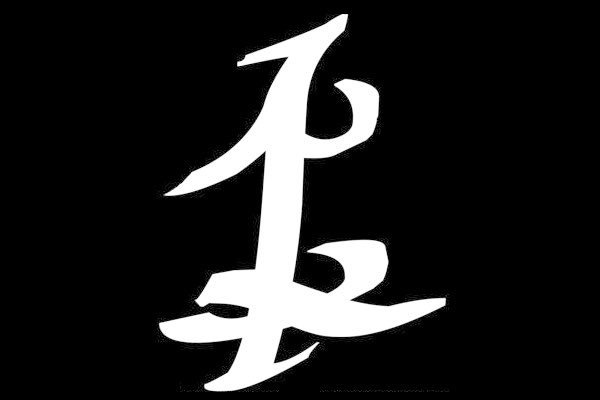
10. The parabatai concept. A parabatai is someone who grew up and trained with you and with whom you share such a special connection with. It is a bond as strong as marriage and if your parabatai dies, a part of you dies as well. Together, you are better fighters than if you are apart. The catch? You can’t ever fall in love with your parabatai (they’re usually same sex, and except for Jace and Alec for obvious reasons, this was never a problem before!). I really think a whole series should be devoted to exploring the parabatai bond. 

So, I have gone on and on about what I love about this series, enough for you bookworms to know that if your trust me, you should buy all six books right now. Seriously, Amazon sells all 6 for the bargain price of £12. Click here to buy!  I really think fans of YA and fantasy will get into this. Or I could be wrong.

Cheers bookworms! 

Posted in Books, relationships, Reviews, romance

In Death: An Ode to JD Robb

There is something to be said about an author who’s got enough mileage to keep a series – for the most part – fresh and interesting 44 books in, with number 45 having just been released this week.

JD Robb, who first gained fame as a romance author under the pen name of Nora Roberts, has earned the title of being one of the most prolific writers in the business. She still publishes under both pseudonyms and she’s able to churn out at least two books a year. While her works as Nora have declined in quality in my own personal opinion, the In Death series under JD Robb feels a little bit like the energiser bunny: its just going to keep on going until her fingers get too arthritic to type on a keyboard.

I read the first book in the series a little over a year ago when I was looking for a good whodunit crime novel. I picked up Origin in Death based on the recommendation of one of my Goodreads friends who has a reputation for always giving honest reviews. I was quite surprised that she praised this one so highly as she’s usually into alternate universes, post-apocalyptic settings and dystopia. In comparison, this “futuristic” series seemed a little bit tame for her taste. Despite the fact that its set about 60 years in the future in a still-recognisable but crazier version of New York City, and despite the fact that there are crazy gadgets and new inventions to help solve crime, at the heart of it this is a procedural crime novel with Lieutenant Eve Dallas of the NYPD at its centre.

Eve and Roarke

Eve is an enigma even to herself. She’s very methodical and all about the job. She cares and stands for her victims and seems to take any crime in her city personally, which is what makes her so good. You can tell she’s been through something nightmarish in her past because she’s so closed off to other people and have very little, if any, time for a personal life. She is the job and the job is what makes her. While working a case, she meets the equally enigmatic and ultra-charming billionaire Roarke (no last name just like Madonna), who was initially one of the suspects in the case she was working on but who she later develops a romantic relationship with.

The mysteries in each book are interesting in and of themselves; I would probably have followed the series for that reason alone. But the backstory and the character development, as well as seeing how a relationship between two people with such a complicated and traumatic past developed into a strong partnership, is what makes the series special. Seeing how Eve Dallas, respected lieutenant with a reputation for solving crimes, navigates the minefield of marriage and is thoroughly discombobulated by her role as a wife provided a comedic fodder for all the other heavy stuff going on in the books. It was also amazing to see how she developed close relationships with other people and how she somehow allowed them in to her world as a result of opening herself up to Roarke. So much so that she finds herself pleasantly surprised that she’s managed to create a family after years and years of being alone.

The Supporting Cast

The supporting characters in the story also enrich the experience of reading the books. We’re introduced to Delia Peabody, Detective McNab, the other detectives at Cop Central, Chief Morris, Captain Feeney, the chief of police, Summerset the butler, Mavis Freestone, even Galahad the cat – they all matter. JD Robb somehow wrote the series in such a way that she gradually made the readers care for each and every one of them one book at a time. But the lynchpin of the books is really Eve. Its such a joy to see her journey as a character. Which isn’t to say that she can’t be annoying. I sometimes get so annoyed by how she sees things in black and white, which is probably why Roarke is perfect for her because he is all about the shades of grey in between.

44 books in the series!

I read all 37 books in this series one after the other. I’m quite happy that I didn’t know just how many books there were when I started because it might have put me off starting. As it is, I’m sure I made Amazon Kindle really happy when I bought all the published books back then in a bundle, it probably cost me a little over 200 quid but its money well spent. Not all the books were great and there were some that I was tempted not to finish because I was bored, but then those books would surprise me with a scene between Eve and Roarke that would just move their relationship forward and it would make up for an otherwise mediocre story. That’s how JD Robb hooks you: if the story is a dud, the character development makes up for it. If there’s nothing new to explore in terms of the main characters, you sink your claws into a good old-fashioned crime mystery. Its the perfect one-two punch.

Unfortunately, none of the books can be read as a standalone. I mean, when you start reading the first three or four you’d just want to carry on anyway. And okay, you can probably pick one book at random and still enjoy a good mystery but the payoff really is in knowing the characters and the history of how they all came to be what they are to each other. Some books are all about the payoff, with returning characters from previous books or a previous issue that was brought up in one of the previous books but was never fully explored. So I wouldn’t recommend not reading them in order. I would recommend borrowing them from someone who’s got the full collection rather than buying them like I did. There are some highlights in the series and you can go visit my page for my top ten favourite In Death books to check out my personal favourites.

All in all, reading books from this series always feels like visiting an old friend. Its always great to escape into Eve and Roarke’s world for a while and to pray that in these troubled times we live in where the world is literally going to hell in a hand basket, there would be someone like her in our police force who will stand for the good people of London the way Eve Dallas does for New York.

More power to JD Robb and may the books keep coming!


Posted in Books, Lifestyle, london

Top Five Reasons Why You Should Join A Book Club

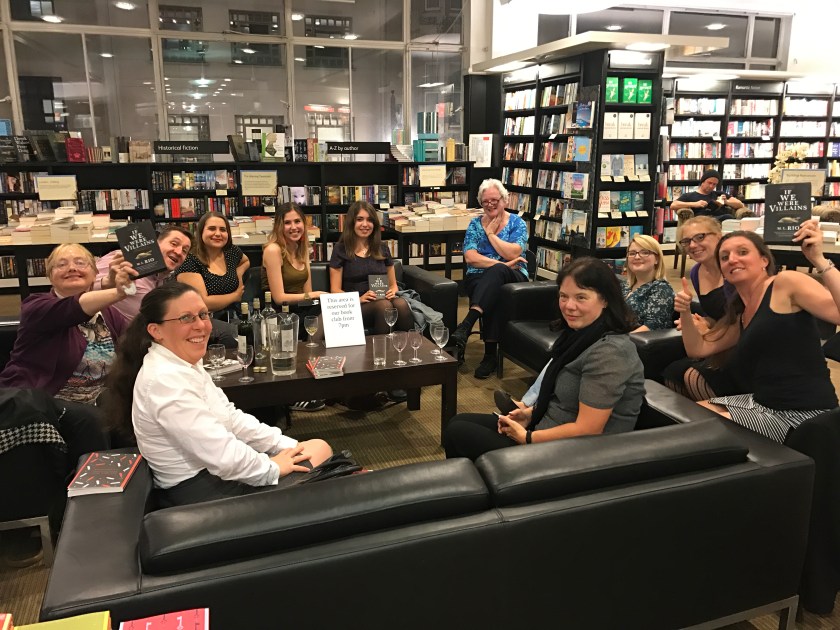
In one of my many attempts to alleviate boredom and broaden my social circle, I joined the Armchair Murders Book Club at Waterstones a couple of months ago. The club meets every first Wednesday of the month at the Piccadilly branch of the well-know bookstore.

When I first started telling people about it, I got a lot of raised eyebrows and funny looks. I think some of my friends had this picture of me sitting with a bunch of old people and knitting while we talk about books. To be fair, I had the same apprehensions going into the first meeting. But I just reached a point where being on the Goodreads community wasn’t enough anymore and I just wanted to meet people who have a similar passion for books. I thought to myself that, if nothing else, I would at least get free wine out of it.

I think back to that first meeting and compared it to the one I attended on Wednesday evening and it really warms my heart to see how much the group has grown in numbers. I think we had about six people in the group when I first joined; on Wednesday there were 15 of us coming in to discuss this month’s book. Half the people in the group were my age or younger, which made for a very lively discussion. Everyone was so into it.

Anyway, if you love books and you love talking about them and analysing them down to the smallest detail, then joining a book club is one of the best things you can do. If you’re having second thoughts because you have pre-conceived notions about book clubs, STOP RIGHT THERE and allow me to tell you why joining one is awesome:


Free Wine

You laugh, but this is actually one of the biggest draw for some people. I mean, if you have to be bored out of your mind, its better to be bored with a glass of pinot grigio in your hand right?

(By the way, I don’t know if all book clubs offer free wine, but Waterstones certainly does)


Ten Percent Discount on Books of the Month

If you buy books as much as I do, every little discount helps. Of all the perks, I think this is the one I love most. The club often selects books for the next two months and I often just get both because I know they’ll be discounted anyway.


You read books that you don’t normally read

I have to admit that I used to be the kind of reader that stuck to certain genres or authors. I mean, I’ve always really loved murder/ mystery and crime fiction, but my choices tend to be more generic or a novel that’s made it to the bestseller’s list. Never in a million years would I have picked up a book like Black Water Lilies, which has been translated from French to English. And that would have been a shame because its now become one of my favourite books.

Because of the book club, I have literally learned not to judge a book by its cover and I’ve discovered so many more books to read. Its also broadened my taste in books in general, as in I now pick up a book because its a good story and not just because its written by an author whose work I’ve read before.


A New Perspective

This month’s book was If We Were Villains by M.L. Rio. If you haven’t read it already, you can see my review on this book here. I raced through that book because the plot and the characters really gripped me. And you can see from my review that I was really drawn to the romantic part of it, going so far as to say that I felt like love was the overarching theme of the book.

Wednesday night’s discussion really gave me a fresh insight into the book. By listening to other people’s opinions and their own interpretation of some of the scenes, I can see my own naïveté and how my own personality and outlook in life colour the way I see things. Among the key points that I learned last night was that love is different from obsession. Love is not love if it hurts other people and that even if you think you’re doing something for someone you supposedly love, it doesn’t mean that you’re not being selfish and manipulative. I will probably never look at a romance novel in the same way again (lol).


Friendly Debates

Of course not everyone loved the book. There were quite a few people who had strong opinions about either the plot or the characters. But the point of the book club is that you have to read it anyway, regardless of whether you want to throw the book against the wall halfway through. I knew from the start that this was the kind of book that would polarise the group and I was right. It was very interesting to hear from both the “lovers” and the “haters” and I really enjoyed debating plot points and character development with people who were as into these things as I was.


New Friends

One of my friends told me once that she really envied how I could easily feel at ease with people I’ve just met. I think I’m just the kind of person who’s interested in everyone’s story. I enjoy a good gab session, I really do. So if  you put me in a situation where I meet new people AND I get to talk about books, then you’ll really see me in my element. I genuinely enjoyed the company of the people I met last night and as a result I have more Facebook and Goodreads friends this week than I had last week. Life is good.


I know joining a book club doesn’t really sound like a cool thing to do. But in my opinion, we already do so many things just to project a certain image to the world, we should be able to do things for ourselves or just because we love it. And that’s what being in a book club means to me. I hope all my fellow bookworms out there find a similar outlet for their passion as well.

Cheers! x


Posted in Books, relationships, Reviews, Uncategorized, Women's literature

Book Review: Where’d You Go Bernadette? – Maria Semple

Its funny. 

We never really think of our parents as being people. To us, they’re Mum and Dad: the people who know all the answers, who can make the scary stuff go away, who will always be there to bandage every hurt and dress every wound. Growing up, we see them as these superhuman creatures that we can always count on to catch us when we fall. That’s how I saw my parents anyway.

Until I moved away from home and embarked on my own “adulting” journey, it never occured to me to think of my parents as two people who are probably just as scared as I am about the responsibilities that come with being an adult. No one really gives you a set of instructions for these things; there’s no set objectives like, year one month one: set up a bank account: month two, make sure you have health insurance. You kind of figure it out as you go along. You fake it and hope to God you make it (I imagine parenthood would be the same but magnified because you’re actually responsible for another person).

So why am I waxing lyrical about mum and dad? Well, that’s kind of the key theme of ‘Where’d You Go, Bernadette?’. Bernadette Fox is many things to different people: an architectural legend,a brilliant but troubled wife, an uncooperative neighbor and the menace of the local parent-teacher association. But to her daughter Bee, she’s really just Mum. Until Bernadette disappears and Bee has to put together the pieces of her mum’s life to really see the dynamic, complex woman beneath the Mommy mask.

This book is told primarily through letters sent to and from Bernadette and letters about Bernadette. These letters were collected by Bee to help her in search for her mum. I always find this epistolary style quite clever. Its hard to give a full picture of a story through letters and emails but I think if done well, it really works. I actually think this novel loses a lot of steam once we got to the more linear kind of narration (from Bee’s point of view).

The blurb is a little bit misleading because I thought the journey to ‘finding’ Bernadette would involve a lot more, well, travelling. Especially to places that relate to her past. I thought the novel would explore her past more because there was a big build up about this ‘terrible thing’ that happened to her which had such a huge impact on her life. But the actual search for Bernadette seemed a bit anti-climactic. It was pretty obvious where she went and I never really understood why she went there, why she stayed and if anything was resolved at the end of the book.

I’m not sure if we readers are meant to sympathise (and like) the titular character. She seemed a mess to me and while I can see why that is, I think I agree with her husband when he said that we shouldn’t let past failures keep us from trying again. Its how you pick yourself up after a fall that matters after all. While this book is intended to be a satire or a dark comedy, I think Bernadette is a really tragic figure in that she never really realises all her potential. Towards the end its hinted that there might be some resolution but as I said, it wasn’t really clear. Maybe this is intentional, I don’t know. I’ve never really been a fan of books that leave the ending open to interpretation.

What’s evident throughout though is the fact that as troubled as Bernadette may have been, no one can doubt that she tried to be a good mother to Bee. She allowed Bee to be whoever she wanted to be and made everything an adventure. She probably wasn’t the most dependable of parents, but she was there when it mattered. It reminded me of that episode of Modern Family when one character said that 80% of the time, being a good parent meant simply showing up.

So yeah, this book was a good read. While I never really connected to the characters or the plot, I can’t deny that I was thouroughly entertained. Maria Semple’s writing style just flows and I would definitely read her other books if the plot sounds interesting. 

I’d like to end this post with a photo of my mum. Whatever else she may have been in the past, I am happy for the combination of whatever fulfilled dreams, untold failures and twists of fate that led her to being my mama, the wind beneath my wings, my anchor and my rock. 😘

Posted in Books, Children's Literature, Fantasy, Reviews

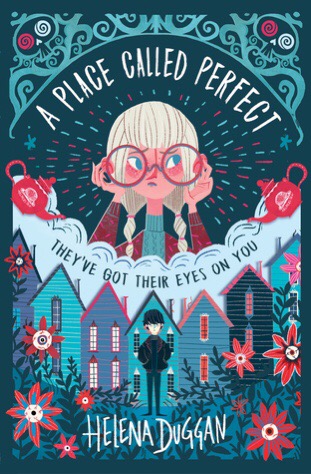
Who Says We Have To Grow Up? Book Review: A Place Called Perfect – Helena Duggan

Three years ago, I went to visit my aunt and uncle in Florida and we drove to Orlando over the weekend to visit Walt Disney World. It was one of the best weekends of my life. I challenge any kid in the world to top my level of excitement when it comes to all things Disney. I rode and sang along to ‘Its A Small a World’; I cheered when Mickey Mouse came strolling down Main Street USA; I queued up to take my photo with the Disney Princesses and I shed a tear during the fireworks display. I loved it

Walt Disney once said that the trouble with the world is that too many people grow up. We lose our sense of wonder; we start to become cynical and lose our faith in people. We don’t believe in magic anymore (I mean, it probably doesn’t exist but isn’t it amazing to think about the possibility?), even Santa has lost his luster. We work 9-5 jobs that barely motivate us, we get bogged down with our day-to-day routine and life becomes a series of to-do lists. We lose our imaginations. 

This is what Helena Duggan is trying to tell us in her book called ‘A Place Called Perfect’. Violet Brown moved to Perfect (yes, that’s the name of the town) with her parents and she immediately knows something isn’t right. Everyone is the same: robotic, smiling faces all obssessed with being perfect. Little by little, her parents start to change and she seems to be the only one concerned. Then she meets Boy and learns about the town’s dark secrets and the cost of too much perfection. 

This is technically a children’s book but so what? Harry Potter started out as a children’s book and look how that turned out. Besides, I see nothing wrong with reading children’s books. I love the simplicity; I love inhabiting a child’s mind even if its just for a little while because there’s something so pure about how a child sees the world. I think as adults we tend to overcomplicate things so that we lose sight of what really matters – joy, love, family. 

The author is trying to warn us about the dangers of stamping out a child’s individuality. We should let children play, we should encourage them to imagine how things could be instead of telling them to be content with how things are. I think its a wonderful thing to grow up feeling like there’s infinite possibilities in the   world. Most of all, I think Ms Duggan is trying to tell us we should allow children the freedom to be who they are.

I gave this book 3 stars because I felt like it could have been longer but that’s just personal preference. The plot itself is perfect and filled with just the right amount of intrigue and twists such that it can be enjoyed by both adults and children. I can imagine this to be a good bedtime reading material and it will certainly create a nice bonding moment between a parent and his/her child. 

Enjoy this book fellow booklovers and don’t ever let anyone tell you we can’t read children’s books. Who says we have to grow up anyway? 

Love, Blabbaholic! Xx

Posted in Books, Classic Literature, Reviews, Uncategorized

Blast From The Past: Book Review – And Then There Were None 

People use the term “classic” to refer to something that transcends generations, a piece of work that remains relevant no matter what decade it is.

 This crime novel from Dame Agatha Christie is a classic in every sense of the word.
The plot is simple. 10 strangers are lured into a secluded island off the coast of Devon by the myseterious U.N. Owen. They started off thinking that it’ll be a nice weekend getaway. Then things take a more sinister turn when, after dinner, a pre-recorded gramophone thingy (I have no idea how a gramophone works) accused them all of being guilty of murder.

All of them denied it of course. There was a plausible explanation behind each accusation. They thought someone was just playing a practical joke…until one of them dies. And then one after the other each member of the party is killed, and the murder method is based on an old nursery rhyme called “Ten Little Soldier Boys.” 

Ten little soldier boys went out to dine; one choked his little self and then there were nine.

Nine little soldier boys sat up very late; one overslept himself and then there were eight.

The remaining guests soon figured out that because of the seclusion of the island and the inability of the boats from the mainland to come across, the murderer could only be one of them. The author did such a great job of creating the atmosphere; one can almost feel the paranoia mounting. Who can you turn to? Who can you trust?

I was amazed that Agatha Christie was able to cram this much action in so few pages. One would think that the characters wouldn’t be as fleshed out because its such a short novel but this actually proves that you don’t need to waste chapters and chapters just to provide someone’s backstory. And this author had 10 characters to contend with! 10 characters represented by 10 figurines of soldier boys in a mantelpiece, each figurine disappearing after one dies. 

Its clear early on that the motive for the murders is related to some form of justice being metted out. But justice for whom? Is the murderer related to one of the purported victims? Is there a common thread to all the victims that would eventually lead to the identity of the killer? These were some of the thoughts running through my head. It felt a little bit like watching the tv show Lost, which tells you how far ahead of its time this novel was. 

My boss told me that the stage adaptation of this book is also quite good. I can see how this would be great as a play; I sometimes felt while reading it that it comes across as a screenplay more than an actual novel. It still doesn’t take away from the genius of it. I was left completely confounded and guessing until the very end. I went so far as to postulate the theory that these people were really all one person, like they were part of “UN Owen”‘s dissociative personality just like in that film with John Cusack called Identity (spoiler alert: they’re not. There really is a murderer!)

I would recommend this book to all lovers of mystery, especially for those who want to have a good read but get bored with long, drawn-out stories. This is for you! 

Posted in Books, Feminism, Reviews, Uncategorized

Book Review: Young Jane Young – Gabrielle Zevin 

Its a narrative as old as time.

 
Young, naive woman meets succesful, prominent  and married older man and is mesmerised by his charismatic persona that she decides to pursue him. They inevitably get caught and get caught up in a scandal. He asks for forgiveness from the public and his wife.

 
The wife has to put her game face on and forgive him; she stands by him and his career and puts the mantle of ‘wronged but strong woman on’ and she gets lauded for this behaviour. Its the ONLY thing that gets her through the days when she wants to scream and shout from rage at the shame and humiliation of it all.

 
The other woman becomes a social pariah; an internet joke; a cautionary tale to young girls everywhere; a shining example of everything that feminism isn’t.
He gets away with a metaphorical slap on the wrist and continues to serve his office for at least one more term.


If all that sounds familiar, that’s because sometimes truth is stranger than fiction and we all had to bear witness as this political sex scandal was gleefully covered by the media almost two decades ago. I think I must have been 9 or 10 when the whole Monica Lewinsky-Bill Clinton scandal broke out. Although I was too young to understand the intricacies of that affair, the basics were pretty clear: he cheated on his wife with a young intern under his employ.

This book was based largely on that true-to-life story but its gives a different perspective and a decidely feminist stance. Aviva Grossman is ‘Florida’s Answer to Monica Lewinsky’ and despite the fact that I abhor the idea of mistresses, the author managed to make even me sympathise and relate to her. All she really wanted is to move on from the repurcussions of that youthful indiscretion and start a new life for herself. In the grand scheme of things, and considering all that she went through, that shouldn’t be too much to ask.

 
But the world can be unforgiving. Aviva drew several parallels from ‘The Scarlet Letter’ when reflecting on her experiences and its true. She may not have been asked to wear a big red A in front of the town, true. But all anyone had to do was google her name and they’d find every detail of the affair (she stupidly kept an anonymous blog that everyone eventually figured out was hers). She had a permanent infamous presence on the internet.

 
‘Slut-shaming’ is a term I hear quite often. I don’t specifically know what it means to slut-shame anyone but I guess its when one or more person makes a judgment about another person’s private life and makes her feel ashamed for her choices. Its anything that paints a woman as this character because she appears to be…forward. This book is meant to be a commentary on slut-shaming and it hits more than it misses.
Its certainly made me feel uncomfortable. It made me think about how often we probably do this unconsciously. There may have been instances where we’ve judged another woman too quickly on her choices and labelled them well, a slut, where they may not have deserved it. You never really know what a person is going through and cliche as it may sound there are always two sides to every story. Who are we to judge other people’s choices? F. Scott Fitzgerald had it right when he said:

Whenever you feel like criticising anyone, remember that all the people in this world haven’t had the advantages that you’ve had.

It all comes down to choice. This is the kind of feminism that books like these fight for: a woman’s right to make and not be judged for the choices she makes. Its not even about the affair and the scandal really. It doesn’t even go into the details of the affair; rather it focuses on the internal struggle between knowing something is wrong and doing it anyway, as well as the long-term effects on Aviva or Jane Young after she had her name legallly changed.

 
Its absolutely inspiring to read the little snippets of feminism that was injected into this book. Its subtle but its there, and it makes you think about how wonderful it is to be human and a woman in 2017, that we’ve come so far in terms of achieving gender equality. I highly recommend this book.

Posted in Books, friendship, Reviews, Women's literature

Book Review: Eleanor Elephant Is Completely Fine – Gail Honeyman

How to describe Eleanor Oliphant in five hundred words or less?

She’s 29 years old and thinks telling people she works in an office is the fastest way to get them to stop asking questions about what she does.

She can go days without ever talking to another living soul. And no, her potted plant – for all its photosynthetic capabilities – does not count.

She’s got a decided opinion on a lot of things. In fact, she reminds me of a female version of Sheldon Cooper from The Big Bang Theory. She takes things literally and portions of human interaction just stump her in its sheer stupidity. To illustrate my – or shall I say Eleanor’s – point, I present to you Eleanor Oliphant’s List Of Inexplicable Things Other People Do:

They choose things like plates, bowls and cutlery – I mean what are they doing at the moment: shovelling food from packets into their mouths with their bare hands? I simply fail to see how the act of legally formalising  a human relationship necessitates friends, family and co-workers upgrading the contents of their kitchen for them.

Eleanor on the madness of a wedding gift registry 


I have yet to find a genre of music I enjoy; its basically audible physics, waves and energised particles, and, like most sane people, I have no interest in physics

Eleanor on the tortures of music

and my personal favourite:

I started to wonder why the band was singing about, presumably, the Young Men’s Christian Association, but then, from my very limited exposure to popular music, people did seem to sing about umbrellas and fire-starting and Emily Bronte novels, so, I supposed why not a gender- and faith-based youth organization

Eleanor on Y.M.C.A. by The Village People 

Bits and pieces of this book truly were laugh-out-loud funny; so much so that its easy to overlook the many messages that its trying to get across. Its hard to put into words just how much this book and this character has affected me. At the heart of it, its a story about a woman’s journey to discovering that you don’t go through life just trying to survive from one day to the next, you want to truly live. And to do that, we have to be able to forge connections with other people. People who pretend that they don’t need other people are deluding themselves. Neediness is a part of human nature, deal with it.

The trouble is, people sometimes are more trouble than they’re worth. They’ll judge you based on your appearance, talk about you behind your back or laugh at you. What I admire about Eleanor is how she handles people likt that. I mean clearly she doesn’t interact with or relate to them in the normal way. But who are we to say what’s normal or abnormal? Eleanor just gets on with things; she ignores the people in her office and doesn’t give a shit about what they think because she’s already gone through the worst thing that a person can experience, something she doesn’t fully remember until near the end of the book. Compared to that, office gossip and ridicule is a walk in the park.

By helping out an old man who suddenly has a heart attack, Eleanor is gradually drawn to new acquaintances, especially Raymond Gibbons who works in IT in the company where she herself works. She gains new experiences; its absolutely hilarious to witness (or read) her first forays into things that are normal for most women: manicure, a haircut and a head of highlights, waxing! I had tears in my eyes from laughter.

Towards the end, I had tears in my eyes for a different reason. Eleanor Oliphant’s message on unconditional love and friendship is powerful. We all need someone who will love us for who we are; who will comfort us when we’re sick because they care, not because they’re expecting anything in return; who will see your faults and be able to accept them. 

Eleanor is adamant that no matter how many new things she tries, she will make it a point to be true to herself, and that is something that I think I can do a bit better. One of my favourite quotes by Erasmus is when he said that “it is the chiefest point of happiness that a man is willing to be who he is”. I could not have put it better myself.

At the end of this book, Eleanor’s past is revealed and we come to understand why she is the way she is. There’s a twist at the end that I should have seen coming and I thought it was not only clever but necessary to the plot. There’s also a sense of a new beginning for our girl, even a hint of romance. By the way, I really liked how this book didn’t make romance the central plot but rather, was injected just enough to drive the narrative forward. The way relationships and love were used in the story is something that we can all relate to, especially where the author points out our tendency to idealise someone in our minds and our need to believe that the “perfect” someone exists. 

Finally, reading this book made me wonder just how many times a day British people say “are you alright?” It’s like the standard greeting apart form ‘hello’. After five years of living here, even I’ve picked up that habit. I’ve always wondered how people will actually react if someone unburdens their life problems when asked that question. Are we really interested or are we just being polite? It seems like all we really want to hear is that they’re “FINE” even when they’re not. 

No one is really truly completely fine. There’s good days and bad days, and days that make life worth living. Live life so that you have more of the latter. I would truly recommend this book to anyone! 

Check out Eleanor Oliphant here