Posted in Books, relationships, Reviews, Uncategorized, Women's literature

Book Review: Where’d You Go Bernadette? – Maria Semple

Its funny. 

We never really think of our parents as being people. To us, they’re Mum and Dad: the people who know all the answers, who can make the scary stuff go away, who will always be there to bandage every hurt and dress every wound. Growing up, we see them as these superhuman creatures that we can always count on to catch us when we fall. That’s how I saw my parents anyway.

Until I moved away from home and embarked on my own “adulting” journey, it never occured to me to think of my parents as two people who are probably just as scared as I am about the responsibilities that come with being an adult. No one really gives you a set of instructions for these things; there’s no set objectives like, year one month one: set up a bank account: month two, make sure you have health insurance. You kind of figure it out as you go along. You fake it and hope to God you make it (I imagine parenthood would be the same but magnified because you’re actually responsible for another person).

So why am I waxing lyrical about mum and dad? Well, that’s kind of the key theme of ‘Where’d You Go, Bernadette?’. Bernadette Fox is many things to different people: an architectural legend,a brilliant but troubled wife, an uncooperative neighbor and the menace of the local parent-teacher association. But to her daughter Bee, she’s really just Mum. Until Bernadette disappears and Bee has to put together the pieces of her mum’s life to really see the dynamic, complex woman beneath the Mommy mask.

This book is told primarily through letters sent to and from Bernadette and letters about Bernadette. These letters were collected by Bee to help her in search for her mum. I always find this epistolary style quite clever. Its hard to give a full picture of a story through letters and emails but I think if done well, it really works. I actually think this novel loses a lot of steam once we got to the more linear kind of narration (from Bee’s point of view).

The blurb is a little bit misleading because I thought the journey to ‘finding’ Bernadette would involve a lot more, well, travelling. Especially to places that relate to her past. I thought the novel would explore her past more because there was a big build up about this ‘terrible thing’ that happened to her which had such a huge impact on her life. But the actual search for Bernadette seemed a bit anti-climactic. It was pretty obvious where she went and I never really understood why she went there, why she stayed and if anything was resolved at the end of the book.

I’m not sure if we readers are meant to sympathise (and like) the titular character. She seemed a mess to me and while I can see why that is, I think I agree with her husband when he said that we shouldn’t let past failures keep us from trying again. Its how you pick yourself up after a fall that matters after all. While this book is intended to be a satire or a dark comedy, I think Bernadette is a really tragic figure in that she never really realises all her potential. Towards the end its hinted that there might be some resolution but as I said, it wasn’t really clear. Maybe this is intentional, I don’t know. I’ve never really been a fan of books that leave the ending open to interpretation.

What’s evident throughout though is the fact that as troubled as Bernadette may have been, no one can doubt that she tried to be a good mother to Bee. She allowed Bee to be whoever she wanted to be and made everything an adventure. She probably wasn’t the most dependable of parents, but she was there when it mattered. It reminded me of that episode of Modern Family when one character said that 80% of the time, being a good parent meant simply showing up.

So yeah, this book was a good read. While I never really connected to the characters or the plot, I can’t deny that I was thouroughly entertained. Maria Semple’s writing style just flows and I would definitely read her other books if the plot sounds interesting. 

I’d like to end this post with a photo of my mum. Whatever else she may have been in the past, I am happy for the combination of whatever fulfilled dreams, untold failures and twists of fate that led her to being my mama, the wind beneath my wings, my anchor and my rock. 😘

Posted in Books, Children's Literature, Fantasy, Reviews

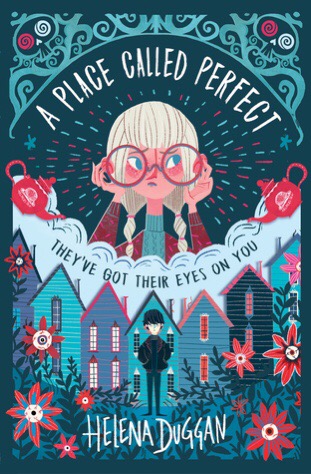
Who Says We Have To Grow Up? Book Review: A Place Called Perfect – Helena Duggan

Three years ago, I went to visit my aunt and uncle in Florida and we drove to Orlando over the weekend to visit Walt Disney World. It was one of the best weekends of my life. I challenge any kid in the world to top my level of excitement when it comes to all things Disney. I rode and sang along to ‘Its A Small a World’; I cheered when Mickey Mouse came strolling down Main Street USA; I queued up to take my photo with the Disney Princesses and I shed a tear during the fireworks display. I loved it

Walt Disney once said that the trouble with the world is that too many people grow up. We lose our sense of wonder; we start to become cynical and lose our faith in people. We don’t believe in magic anymore (I mean, it probably doesn’t exist but isn’t it amazing to think about the possibility?), even Santa has lost his luster. We work 9-5 jobs that barely motivate us, we get bogged down with our day-to-day routine and life becomes a series of to-do lists. We lose our imaginations. 

This is what Helena Duggan is trying to tell us in her book called ‘A Place Called Perfect’. Violet Brown moved to Perfect (yes, that’s the name of the town) with her parents and she immediately knows something isn’t right. Everyone is the same: robotic, smiling faces all obssessed with being perfect. Little by little, her parents start to change and she seems to be the only one concerned. Then she meets Boy and learns about the town’s dark secrets and the cost of too much perfection. 

This is technically a children’s book but so what? Harry Potter started out as a children’s book and look how that turned out. Besides, I see nothing wrong with reading children’s books. I love the simplicity; I love inhabiting a child’s mind even if its just for a little while because there’s something so pure about how a child sees the world. I think as adults we tend to overcomplicate things so that we lose sight of what really matters – joy, love, family. 

The author is trying to warn us about the dangers of stamping out a child’s individuality. We should let children play, we should encourage them to imagine how things could be instead of telling them to be content with how things are. I think its a wonderful thing to grow up feeling like there’s infinite possibilities in the   world. Most of all, I think Ms Duggan is trying to tell us we should allow children the freedom to be who they are.

I gave this book 3 stars because I felt like it could have been longer but that’s just personal preference. The plot itself is perfect and filled with just the right amount of intrigue and twists such that it can be enjoyed by both adults and children. I can imagine this to be a good bedtime reading material and it will certainly create a nice bonding moment between a parent and his/her child. 

Enjoy this book fellow booklovers and don’t ever let anyone tell you we can’t read children’s books. Who says we have to grow up anyway? 

Love, Blabbaholic! Xx

Posted in Books, Classic Literature, Reviews, Uncategorized

Blast From The Past: Book Review – And Then There Were None 

People use the term “classic” to refer to something that transcends generations, a piece of work that remains relevant no matter what decade it is.

 This crime novel from Dame Agatha Christie is a classic in every sense of the word.
The plot is simple. 10 strangers are lured into a secluded island off the coast of Devon by the myseterious U.N. Owen. They started off thinking that it’ll be a nice weekend getaway. Then things take a more sinister turn when, after dinner, a pre-recorded gramophone thingy (I have no idea how a gramophone works) accused them all of being guilty of murder.

All of them denied it of course. There was a plausible explanation behind each accusation. They thought someone was just playing a practical joke…until one of them dies. And then one after the other each member of the party is killed, and the murder method is based on an old nursery rhyme called “Ten Little Soldier Boys.” 

Ten little soldier boys went out to dine; one choked his little self and then there were nine.

Nine little soldier boys sat up very late; one overslept himself and then there were eight.

The remaining guests soon figured out that because of the seclusion of the island and the inability of the boats from the mainland to come across, the murderer could only be one of them. The author did such a great job of creating the atmosphere; one can almost feel the paranoia mounting. Who can you turn to? Who can you trust?

I was amazed that Agatha Christie was able to cram this much action in so few pages. One would think that the characters wouldn’t be as fleshed out because its such a short novel but this actually proves that you don’t need to waste chapters and chapters just to provide someone’s backstory. And this author had 10 characters to contend with! 10 characters represented by 10 figurines of soldier boys in a mantelpiece, each figurine disappearing after one dies. 

Its clear early on that the motive for the murders is related to some form of justice being metted out. But justice for whom? Is the murderer related to one of the purported victims? Is there a common thread to all the victims that would eventually lead to the identity of the killer? These were some of the thoughts running through my head. It felt a little bit like watching the tv show Lost, which tells you how far ahead of its time this novel was. 

My boss told me that the stage adaptation of this book is also quite good. I can see how this would be great as a play; I sometimes felt while reading it that it comes across as a screenplay more than an actual novel. It still doesn’t take away from the genius of it. I was left completely confounded and guessing until the very end. I went so far as to postulate the theory that these people were really all one person, like they were part of “UN Owen”‘s dissociative personality just like in that film with John Cusack called Identity (spoiler alert: they’re not. There really is a murderer!)

I would recommend this book to all lovers of mystery, especially for those who want to have a good read but get bored with long, drawn-out stories. This is for you! 

Posted in Books, Feminism, Reviews, Uncategorized

Book Review: Young Jane Young – Gabrielle Zevin 

Its a narrative as old as time.

 
Young, naive woman meets succesful, prominent  and married older man and is mesmerised by his charismatic persona that she decides to pursue him. They inevitably get caught and get caught up in a scandal. He asks for forgiveness from the public and his wife.

 
The wife has to put her game face on and forgive him; she stands by him and his career and puts the mantle of ‘wronged but strong woman on’ and she gets lauded for this behaviour. Its the ONLY thing that gets her through the days when she wants to scream and shout from rage at the shame and humiliation of it all.

 
The other woman becomes a social pariah; an internet joke; a cautionary tale to young girls everywhere; a shining example of everything that feminism isn’t.
He gets away with a metaphorical slap on the wrist and continues to serve his office for at least one more term.


If all that sounds familiar, that’s because sometimes truth is stranger than fiction and we all had to bear witness as this political sex scandal was gleefully covered by the media almost two decades ago. I think I must have been 9 or 10 when the whole Monica Lewinsky-Bill Clinton scandal broke out. Although I was too young to understand the intricacies of that affair, the basics were pretty clear: he cheated on his wife with a young intern under his employ.

This book was based largely on that true-to-life story but its gives a different perspective and a decidely feminist stance. Aviva Grossman is ‘Florida’s Answer to Monica Lewinsky’ and despite the fact that I abhor the idea of mistresses, the author managed to make even me sympathise and relate to her. All she really wanted is to move on from the repurcussions of that youthful indiscretion and start a new life for herself. In the grand scheme of things, and considering all that she went through, that shouldn’t be too much to ask.

 
But the world can be unforgiving. Aviva drew several parallels from ‘The Scarlet Letter’ when reflecting on her experiences and its true. She may not have been asked to wear a big red A in front of the town, true. But all anyone had to do was google her name and they’d find every detail of the affair (she stupidly kept an anonymous blog that everyone eventually figured out was hers). She had a permanent infamous presence on the internet.

 
‘Slut-shaming’ is a term I hear quite often. I don’t specifically know what it means to slut-shame anyone but I guess its when one or more person makes a judgment about another person’s private life and makes her feel ashamed for her choices. Its anything that paints a woman as this character because she appears to be…forward. This book is meant to be a commentary on slut-shaming and it hits more than it misses.
Its certainly made me feel uncomfortable. It made me think about how often we probably do this unconsciously. There may have been instances where we’ve judged another woman too quickly on her choices and labelled them well, a slut, where they may not have deserved it. You never really know what a person is going through and cliche as it may sound there are always two sides to every story. Who are we to judge other people’s choices? F. Scott Fitzgerald had it right when he said:

Whenever you feel like criticising anyone, remember that all the people in this world haven’t had the advantages that you’ve had.

It all comes down to choice. This is the kind of feminism that books like these fight for: a woman’s right to make and not be judged for the choices she makes. Its not even about the affair and the scandal really. It doesn’t even go into the details of the affair; rather it focuses on the internal struggle between knowing something is wrong and doing it anyway, as well as the long-term effects on Aviva or Jane Young after she had her name legallly changed.

 
Its absolutely inspiring to read the little snippets of feminism that was injected into this book. Its subtle but its there, and it makes you think about how wonderful it is to be human and a woman in 2017, that we’ve come so far in terms of achieving gender equality. I highly recommend this book.

Posted in Books, friendship, Reviews, Women's literature

Book Review: Eleanor Elephant Is Completely Fine – Gail Honeyman

How to describe Eleanor Oliphant in five hundred words or less?

She’s 29 years old and thinks telling people she works in an office is the fastest way to get them to stop asking questions about what she does.

She can go days without ever talking to another living soul. And no, her potted plant – for all its photosynthetic capabilities – does not count.

She’s got a decided opinion on a lot of things. In fact, she reminds me of a female version of Sheldon Cooper from The Big Bang Theory. She takes things literally and portions of human interaction just stump her in its sheer stupidity. To illustrate my – or shall I say Eleanor’s – point, I present to you Eleanor Oliphant’s List Of Inexplicable Things Other People Do:

They choose things like plates, bowls and cutlery – I mean what are they doing at the moment: shovelling food from packets into their mouths with their bare hands? I simply fail to see how the act of legally formalising  a human relationship necessitates friends, family and co-workers upgrading the contents of their kitchen for them.

Eleanor on the madness of a wedding gift registry 


I have yet to find a genre of music I enjoy; its basically audible physics, waves and energised particles, and, like most sane people, I have no interest in physics

Eleanor on the tortures of music

and my personal favourite:

I started to wonder why the band was singing about, presumably, the Young Men’s Christian Association, but then, from my very limited exposure to popular music, people did seem to sing about umbrellas and fire-starting and Emily Bronte novels, so, I supposed why not a gender- and faith-based youth organization

Eleanor on Y.M.C.A. by The Village People 

Bits and pieces of this book truly were laugh-out-loud funny; so much so that its easy to overlook the many messages that its trying to get across. Its hard to put into words just how much this book and this character has affected me. At the heart of it, its a story about a woman’s journey to discovering that you don’t go through life just trying to survive from one day to the next, you want to truly live. And to do that, we have to be able to forge connections with other people. People who pretend that they don’t need other people are deluding themselves. Neediness is a part of human nature, deal with it.

The trouble is, people sometimes are more trouble than they’re worth. They’ll judge you based on your appearance, talk about you behind your back or laugh at you. What I admire about Eleanor is how she handles people likt that. I mean clearly she doesn’t interact with or relate to them in the normal way. But who are we to say what’s normal or abnormal? Eleanor just gets on with things; she ignores the people in her office and doesn’t give a shit about what they think because she’s already gone through the worst thing that a person can experience, something she doesn’t fully remember until near the end of the book. Compared to that, office gossip and ridicule is a walk in the park.

By helping out an old man who suddenly has a heart attack, Eleanor is gradually drawn to new acquaintances, especially Raymond Gibbons who works in IT in the company where she herself works. She gains new experiences; its absolutely hilarious to witness (or read) her first forays into things that are normal for most women: manicure, a haircut and a head of highlights, waxing! I had tears in my eyes from laughter.

Towards the end, I had tears in my eyes for a different reason. Eleanor Oliphant’s message on unconditional love and friendship is powerful. We all need someone who will love us for who we are; who will comfort us when we’re sick because they care, not because they’re expecting anything in return; who will see your faults and be able to accept them. 

Eleanor is adamant that no matter how many new things she tries, she will make it a point to be true to herself, and that is something that I think I can do a bit better. One of my favourite quotes by Erasmus is when he said that “it is the chiefest point of happiness that a man is willing to be who he is”. I could not have put it better myself.

At the end of this book, Eleanor’s past is revealed and we come to understand why she is the way she is. There’s a twist at the end that I should have seen coming and I thought it was not only clever but necessary to the plot. There’s also a sense of a new beginning for our girl, even a hint of romance. By the way, I really liked how this book didn’t make romance the central plot but rather, was injected just enough to drive the narrative forward. The way relationships and love were used in the story is something that we can all relate to, especially where the author points out our tendency to idealise someone in our minds and our need to believe that the “perfect” someone exists. 

Finally, reading this book made me wonder just how many times a day British people say “are you alright?” It’s like the standard greeting apart form ‘hello’. After five years of living here, even I’ve picked up that habit. I’ve always wondered how people will actually react if someone unburdens their life problems when asked that question. Are we really interested or are we just being polite? It seems like all we really want to hear is that they’re “FINE” even when they’re not. 

No one is really truly completely fine. There’s good days and bad days, and days that make life worth living. Live life so that you have more of the latter. I would truly recommend this book to anyone! 

Check out Eleanor Oliphant here


Posted in Books, Reviews, romance

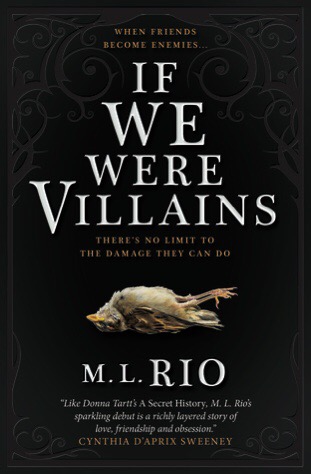
Waterstones Armchair Murders Book Club Pick of the Month: If We Were Villains

Full disclosure: I skipped through the end of this book because I just could not bear not knowing what happened for a minute longer.

I picked up this book because it was selected for next month’s book club meeting. Had I known that it had been frequently compared to Donna Tartt’s A Secret History, I may have hesitated to start it because I found that book as tedious as it was – strangely -compulsively readable. I found the characters in that book so unbelievably pretentious. And, I may be the stupidest person in the world for saying this, but I just did NOT get what all the latin translations contributed to the plot advancement. I did not understand why so many people found the book life-changing but agree to disagree.

This book could not have been any more different.

The thing I love and hate most about reading a book is when you become so invested in the characters that you share in their joys, hopes, disappointments and sorrows. M.L. Rio, almost from the first 50 pages, made me care so much about her protagonist Oliver Marks that I felt a genuine sense of foreboding when he began his story.

The Synopsis

Oliver has been in jail for the past 10 years and his release coincides with the retirement of the detective who took on his case. Wanting closure, the old detective’s final request is for the truth: what really happened during that cold November night when one of Oliver’s friends wound up dead in the lake? 

They were seven friends who shared one thing in common: an all-consuming passion for acting. And not just any acting; Shakespearean acting. Throughout their four years in an exclusive school for the arts they’ve been typecasted: the hero, the villain, the star, the sidekick, the vixen. But when a teacher decided to shake things up and change the status quo, the power shifts; friendships are threatened, rivalries awakened, secrets unraveled, ultimately ending in tragedy.

Oh, The Feels

I don’t think this will be the most coherent review I’ve ever done mostly because I’m writing with my heart rather than my head. All I am after this book is a mass of feelings. Honestly.  This book is more than just a crime novel; its a coming of age story, its an ode to the great bard and most of all its an epic, passionate romance. I know this is supposed to be a thriller, but honestly its LOVE that underscores all the scenes in this book. The kind of love that makes fools of us all, the kind of love that borders on insanity.
Oliver is the kind of character who just grabs you. There is no way to describe him without giving away spoilers because to understand how things turned out the way they were, to really understand his motives, you have to look at the heart of who he is. There are things that were so blindingly obvious to me as the book unfolded that I pretty much guessed whodunit early on. I don’t know if its just me but it really wasn’t that much of a mystery. 

The Twist

I really love a good ending. And a good ending for me is one that ties up all the loose ends; I do not like ending a book with more questions and I do not like to be kept hanging. But really, if done right, ambiguous endings have this impact on readers that cannot be put into words. And this one sure did a number on me. I have read and re-read the last two pages of this book five times and I’ve even googled Shakespeare to give me some clues but I’m still left with the need to rip my hair out because I really want to know what it all means.

I know that we’re meant to form our own conclusion as to the ending but dammit ML Rio, YOU CAN’T DO THIS TO ME!!! 

I’m quite excited to go to book club now and discuss this with the others. I just really need someone to reaffirm my interpretation of the ending. That’s all I need, one person to tell me that the version of events unfolding in my head is not so far-fetched. It’ll be interesting to see how my fellow book club members will react to this. I have a feeling this may have a polarising effect on the group. It will sure make for an interesting discussion.

Hey bookworms in London, if you’re interested in discussing fabulous crime and mystery books, join us every first Wednesday of the month at Waterstones Piccadilly. Free wine! More details here.

Posted in Books, Careers, Feminism, Lifestyle, london, Reviews

Book Review: The Great Chick-Lit-A-Thon

I always think that people who abuse chick-lit as being all fluff and no substance has never had a week where you’ve used your brain so much that you just want to sit down for a day and not use up any more brain cells. That is what a chick lit is for. Its not unintelligent; in fact, I think it takes brains and talent to write a good chick lit. I don’t think it should even be called chick lit, that term is absolutely sexist. Yes, these books are written for and by women but I think men can learn a lot from them too (It certainly won’t hurt their E.Q. )

I will defend chick lits with my life. I think there comes a point in your year where you absolutely need a good escapist read. I think people who disparage these books as being so far from literature should get over themselves. Of course they’re not literature! One way to avoid going through life perpetually disappointed is to adjust your expectations. Take these books the way they were meant to be taken: they are pure, escapist enjoyment meant to be taken on a beach holiday and read for relaxation. Once in a while they provide a good social commentary and that is why this genre exists, because it is relatable AF.

Ok, I’ve said my piece. Let’s get to the review.

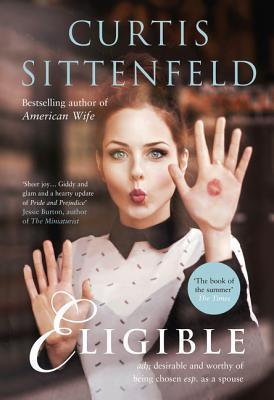
Eligible – Curtis Sittenfeld

18633327

Pride and Prejudice is one of my favourite books of all time (talk about literature!). I love it so much that I’ve seen both the tv and movie version at least 10 times;

I salivated over seeing Matthew McFadden walking down Soho and I’m still kicking myself for not having the balls to get his autograph. I’ve read every spinoff of the book that has ever been released, even trashy ones such as Mr. Darcy Takes A Wife and Elizabeth and Darcy. I even considered reading Pride and Prejudice and Zombies but stopped myself. So when I saw this book on a trip to Waterstones, I thought, why not?

Eligible is a modern retelling of the classic tale every woman out there (who hasn’t been living under a rock) loves. For the life of me, I cannot understand why out of all the bars and gin joints in the world Curtis Sittenfeld chose to set this story in Cincinnati. There could not be a less glamorous setting for a retelling. But I read on a review somewhere that the author came form Cincinnati so she’s probably killing two birds with one stone: writing about what she knows and shamelessly plugging her hometown.

Mr. Bingley (or Chip Bingley in this version) is an ER (A and E for those of us on this side of the Atlantic) doctor who was once a contestant in a reality show called Eligible, which I imagine to be something similar to The Bachelor. He went on it on the urging of his sister/manager Caroline and because he wanted to find love. At the end of it he just could not bring himself to choose from either of the finalists because he didn’t think what he had with them was real. He moved to Cincinnati and took a job at the University Hospital where his good friend Fitzwilliam Darcy was a bloody neurosurgeon (of course he is).

Liz and Jane are not the shy, innocent virgins that they were in the original version. In fact, Jane is nearly forty, a yoga instructor and has been trying to have a child through IVF for years. Liz is 38, works for a magazine and has been having an affair with her close friend, the married Jasper Wick (Mr Wickham) for a long time and has been stupidly in love with him for even longer. They are both called back to the family home when their father has a heart attack.

I found this to be a really clever retelling. The Bennets are just as ridiculous as in the original and Mrs Bennet clearly transcends generations, revisions and retelling because I found her just as overbearing and annoying. I think the book did a really good job of injecting modern issues while still keeping the theme of the original intact. And I guess that’s only to be expected because no matter how enlightened and progressive we believe ourselves to be as a society, marriage is still by-and-large a game. An eligible bachelor such as Chip Bingley is still eyed and sized by ambitious mamas out there to see if he’s the right fit for their daughters. I’ve talked about the pressure to be paired up and settled as you grow older in my previous blog and that’s hasn’t changed from when Jane Austen published her novel. The shelf-life of women has probably expanded a bit, but a woman in her 30s who is still single is still seen as an anomaly.

I like how this book tackles feminism and proposes the idea that to devote yourself to another person doesn’t mean having to give up being your own woman.

There’s a belief that to take care of someone else, or to let someone else take care of you—that both are inherently unfeminist. I don’t agree. There’s no shame in devoting yourself to another person, as long as he devotes himself to you in return.

All in all, this was a really enjoyable book.

My Not So Perfect Life – Sophie Kinsella

31295340

I used to love Sophie Kinsella when I was in college. When I moved to London I found it a little hard to read her books because I thought they were unrealistic. Living in London is fun but its incredibly tough. Not everyone gets the glamorous jobs in advertising; we don’t all have fun Friday nights where we do all kinds of quirky things. In short, its not as perfect as her novels seem to portray.

Which is why I love this one.

My Not So Perfect Life is a glaring reality check on what social media has done to us as a society, especially for the younger generation, the so-called millennials. I think that we’ve all always felt the pressure to be perfect: the perfect daughter, the perfect employee, the perfect woman. With the advent of social media, there is an added pressure to not just be perfect but to make sure that everyone else knows it. To be honest, I sometimes hate looking at social media feeds, especially when I’ve had a particularly tough day at work or if I’ve had to re-think my holiday plans because I just can’t afford it. I see my friends’ posts and they just seem to be on holiday all the time and I find myself thinking, how in the hell did they find the time and money to do all that? Or I look at other people’s blogs or vlogs and think, mine will never be as interesting as that, my life just isn’t that instagrammable.

Truly, don’t ever go on Facebook or Instagram if you’re not feeling good about your life. 

This book tells the story behind the social media posts. It dares to say that there’s a story behind every perfect post. People project what they want to project into the social media world because they feel the need to maintain an image. Not all of it is real. We shouldn’t lose sight of who we are just because we inspire to be instagrammable. We shouldn’t bend over backwards to make other people think life is perfect because guess what? No one’s life is perfect. Not even movie stars with their blogger poses. They go through their ups and downs the same way as we do, they probably just hide it better. And maybe they have more expensive drinks to process their grief, but grieve they do nonetheless.

I loved this book. I finished it in one sitting. At one point, I felt the need to book myself into a glamping campsite just to see what the experience is like.

I think this book has an important message, especially to the young women of today.

Whoever started the rumor that life has to be perfect is a very wicked person, if you ask me.

Life isn’t always instagram-perfect but you don’t want it to be. You are more than your social media feeds, you do not need to maintain an image. Be real, be you, be better than Facebook.

 I would definitely recommend both these books for people who are looking for a light easy read as we near the end of summer. Enjoy, bookworms! 


Posted in Books, Paranormal, Reviews, romance

Book Review: The Silent – Elizabeth Hunter

You know a book is good when you wake up at 6am on a Saturday (your day off) to read it and then find yourself finishing in four hours.

This book is number 5 in The Irin Chronicles and tells the story of Leo, one of the Istanbul scribes and Kyra, one of the kareshta or silent ones. The kareshta are daughter of the Fallen, angels who have defied The Creator and made earth their own personal playground. Their lust for power among mortals led to their banishment from heaven. Most are evil creatures who do not teach their children how to control their magic. Their male offspring, called Grigori, become predators whose lust for any human contact frequently lead to deaths for any female they encounter. Grigori are turned into their sire’s soldiers and are helpless to resist their sire’s commands. The kareshta are not valued as much as the Grigori. Most are killed because they are considered worthless. Those that live have learned to be silent because their voices are part of the unknown and are therefore feared. 

At the end of the previous books, some of the Fallen have been reconciled to heaven leaving their sons and daughters free to live their lives for the first time. Most struggle to integrate into the Irin society because of the long, painful history they share. Some of the kareshta are mated with Irin scribes who have been deprived of any female contact for so long. Some try to live in the human world after they’ve been taught to control their ability to hear soul voices. Its againts this turbulent background that Leo and Kyra’s relationship is forged and tested. 

Leo and Kyra were part of the supporting characters in the previous books so its really hard to follow their story if you haven’t read the other books, I would never classify this as a standalone book because a reader who reads this first would be depriving themselves of a lot of history. That being said, I think this story is the start of a whole new series told about the sons and daughter of the Fallen. We learn so much about the Grigori here, and though they’ve done unspeakable and unforgivable things in their past we also get their backstory in this book. I think its so easy to hate something that you don’t understand, and that sentiment is very relevant in these troubled times we’re living in. So much violence stems from so little understanding that underneath all the differences, we are all the same.

A twist of fate and an unwanted inheritance is all that separates the Grigori from the Irin. This is the point that Kyra was trying to make when she was fighting for acceptance and integration into the community, rather than just tolerance. I think Elizabeth Hunter did a fantastic job of building this world and developing different narratives that she has easily set herself up for at least three more books in this world. I cannot wait for the Grigori to start falling in love. This is just me, I really like imperfect men who struggle against seemingly insurmountable odds to remain good.

The love story itself was also great but the romance alone would never have held this book up. It was an adventure from start to finish and the exotic locations make me think the Elizabeth must have gone on a trip to Southeast Asia in which case I hope she visited the Philippines. Dare I hope there will be a story set in my home country? One can dream.

Anyway, great story and a great addition to the series! Looking forward to whatever Elizabeth decides to write next.

Posted in Books, Classic Literature, Reviews

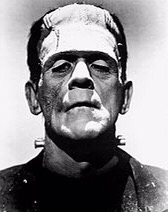
Book Review: Frankenstein by Mary Shelley

If I cannot inspire love, then I shall cause fear.

Thus spoke Frankenstein’s monster, one of the most well-known “villains” of our time. This story has been adapted for television and the big screen so many times and has become such a big part of popular culture that I think the essence of what Mary Shelley intended the story to be about has been lost.

I have to admit that I always thought of Frankenstein as a comedic horror story but that’s maybe because in my head I get the monster confused with Lurch from the Addams Family (you raaannngggg?). 

But its actually a story about accepting your place in the world and being careful about tampering with the natural order of things.

Victor Frankenstein led a relatively happy life in Switzerland, where the story is set, and was on course to have a life of love and contentment. He had a lover in the form of his cousin, a doting father, two brothers, good friends, anything a man could wish for to be settled and happy. As fate would have it, he was sent to Ingolstadt to study and it was there that his curiosity (and later all-consuming passion) for science was developed. He began his experiments based on the theories he read about in books and made a breakthrough when he managed to galvanise a “being” that he constructed from bits and pieces of human parts. When he actually beheld the fruits of his labours, he was filled with so much horror at the monster he created that he ran away and turned his back on this being.

The monster, feeling rejected and all alone, developed a hatred for all of mankind. There was a chapter or two devoted to his side of the story. He relates how he first learned to separate his senses, his first observations of humans and their complex relationships, his desire to be part of a wider community, the pains he took to learn the language so that he can express his desire to be loved despite the barrier created by his monstrous appearance; and then he relates how each rejection served to turn his love into hatred and then finally the need to inflict pain and have his revenge.

There is a subtext here about judging people by their appearances. The tale can be interpreted as  a rebuke for all those who don’t look beyond the surface or the superficial and as such, miss a person’s true character. Its almost as if Mary Shelley is suggesting that society, by shunning this “monster” and not giving him a chance is the ultimate cause in making him a monster in the first place. The old nature vs nurture argument can be rehashed here: was he truly evil or did the lack of guidance and companionship perpetuate that evil? If he had been accepted into society, if Victor had taken part in his “upbringing” would things have turned out differently? We’ll never know. 

The book is tragic. There is no happy ending here and I’m sorry if that’s a spoiler, but seriously, this is a miserable cautionary tale about what happens when man overreaches. 

How much happier that man is who believes his native town to be the world than he who aspires to be greater than his nature will allow

I am a product of the 21st century and I am grateful for everything that scientific discoveries have allowed us to enjoy: advances in communication so that I can regularly talk to my mother when she’s half a world away, the internet, medicine, all the daily conveniences that we take for granted- we have all this  because some men aspired to greatness. However, I can’t help but agree that everything is happening too fast and the world is developing at such a rapid pace that we never really stopped to think about the repurcussions. Or the price we’ve paid in the name of science.

Ultimately, as our friendly neigbourhood Spider-Man would say, with great power comes great responsibility. Anything can be destructive if used in excess and if used for evil instead of good. The same technology that gives fuel to the world can also be used to annihilate it. It all comes to down to the will of man, and that’s a scary thought because I don’t think we’re ready for that kind of responsibility. You don’t need to look any further than North Korea for proof of that. Victor Frankenstien warns us of the same; he destroyed his work because no one is ready for that kind of knowledge. He’s seen what it can do and would rather not be the cause of any suffering. 

The book was engaging, well-written and appropriately paced. It dragged a little bit in the middle but that’s my own personal taste talking because I’ve never been one to appreciate extensive descriptions of nature. I prefer dialogue more than scenery, to be honest. Overall though, I’m glad I was finally able to read this story in its entirety. Four stars! 

Posted in Books, Reviews

Book Review: Birdsong – Sebastian Faulks

When my parents came to visit my sister and I last year, I spent an afternoon at the Imperial War Museum with my father. I could not believe that I’d gone 5 years in London without visiting this museum; I’ve always found the First and Second World War fascinating, the latter even more so after a trip to one of the German concentration camps in 2012. Anyway, the museum has this area where they built a replica of the trenches that became the everday reality of the British troops. Visitors will have the chance to walk through it and try to imagine what life must have been like during those 4 long years of war.

I don’t remember exactly how I felt going through those trenches. I think I may have been too much in a rush to get to the Jewish holocaust memorial in the other floor to really give it serious thought. I never thought about how tragic it must have been for these men, most of them fresh out of university and in an alternate life where peace reigned supreme might have been capable of great things, to have their world reduced so dramatically. I don’t understand war: the terms trench warfare, fronts and lines are terms that I vaguely get. 

What I do know is that wars always end up being a senseless waste of life. Its such a great thing to be able to fight for love of your country, but the more I read about The Great War (World War I as it is known in the UK), the more I think that nothing could have been worth the wipeout of men from both sides. Sebastian Faulks’ Birdsong drives home the facts of  what those men went through, the degradations they subjected themselves to, the experiences that tested the very existence of their humanity.

I don’t know why anyone would classify this book as a love story. I was greatly misled in that sense and in a way, I don’t mind. If this had been another novel of lost love during the war I would have been able to brush it off. But what I really got from reading it was a brutal account of what the men who were there went through. The most touching moments of the novel came not from the main love story but in the stories of friendship and courage among the British soldiers. I was moved by how they tried to achieve normalcy and carry on even though they know that they’ve seen too much to ever lead normal lives again. 

The noise of their laughter roared like the sea in his ears. He wanted it louder and louder; he wanted them to drown out the war with their laughter. If they could shout loud enough, they might bring the world back to its senses; they might laugh loud enough to raise the dead.

I think this book isn’t so much about Stephen Wraysford than it is about the horrors of war and how our understanding of what these men have been through is disproportionate to the gratitude that they are owed.  I’ve heard the word shellshocked before and I never realised where the term came from but really, Sebastian Faulks painted a really clear picture of the psychological effects of having gone through battle after battle, and how even survivors simply existed rather than lived for a long time afterwards.

Essentially, the theme of the book is that life goes on and you will find a way to carry on. The author also suggests that everyone has a built in survival instinct. At the point in your life where death becomes imminent you will connect with the world and find a reason to live. I think that’s a very beautiful concept. I like Sebastian Faulks’ prose, I find it very lyrical.  

The end scene of Stephen Wraysford’s life was beautifully done. I won’t give it away but its reminiscent of the Sainsbury’s Christmas ad in 2015, which still reduces me to a sobbing mess each time I see it. It will reduce war to at its most basic reality: those enemies are fathers, sons, uncles, husbands, lovers, friends…just like you they had dreams, passions, ambitions. It is the war that made monsters of men I think. I find myself thanking God that I live mostly in a peaceful time but do I really? Have any of the wars really ended? I don’t think war will ever truly end until we learn something from each one that’s ever been fought. And we haven’t. Therein lies the reason why novels like these are still so resonant and relevant. 

BBC did an adaptation of this novel starring Eddie Redmayne which has now gone on my list of things to watch. Also, a similar book on The Great War was written by Vera Brittain called ‘Testament of Youth’, although this one’s more autobiographical. 

Enjoy, bookworms