Posted in Books, Reviews, romance, Young Adult

Book Review – Turtles All The Way Down

So there’s this saying about books that we’ve all heard that says we’re not to judge it by its cover. Yes, I get that its not meant to be taken literally, as in we’re not really talking about books when we spout that overused statement. But because I’m actually reviewing a book and finding myself unusually unsure about where to start, I’ll start with that. We don’t judge a book by its cover; we judge a book based on how much it makes us think and how it makes us feel.

00102367-400x400


John Green’s latest offering has me baffled, to be honest. On one hand, there are bits about it that I really really like and which I’ll get to later. On the other hand, a part of me found it really difficult to get through the book especially towards the end when things start to spiral out of control for our main character.

Aza Holmes is a teenager who is trying, really trying, to co-exist with the thoughts that live in her head. She tries to lead a normal life with her fearless best friend Daisy and even finds the time to dabble in a little mystery: the mystery of where billionaire Russell Pickett has hidden himself to avoid getting arrested for corruption. She also makes a connection with said billionaire’s son, Davis, whom she met at “sad camp” years ago and this connection slowly leads to – what else – the sweet sweet bloom of first love.

First of all, I think John Green did a really good job of not just describing what mental illness feels like but really getting the readers as close to the real experience as one can get while reading a fictional novel. The scenes where Aza becomes a helpless victim to her thoughts, to the point where she can’t even kiss a guy she likes without freaking out, were really painful for me to read. In that moment, I was as fully invested as Aza to the outcome of that situation and that speaks to John Green’s talent as an author.

I mentioned that I found it difficult to get through the book. I think what I meant to say is that it hit a little too close to home. Aza gets anxious about her health, specifically about getting an infection. I’ve already admitted in a previous post that I’ve always been a little bit of a hypochondriac. At one point in my life, I was so convinced that I had brain tumour because I found a lump at the back of my head. I remember crying in the dark in my room, crying in church and thinking about all the things that I will never get to do because I was going to die of brain tumour. I think I must have been about 12 or 13.

After a week, I managed to rid myself of these irrational thoughts and correctly concluded that I did not have brain tumour. Studying Nursing made my anxiety about my health both better and worse. Better because I can usually reason myself out of my worries by reciting the signs and symptoms of my imagined illness – signs and symptoms that I didn’t have – and worse because whenever I do have symptoms, my brain goes to the worst possible scenario there is.

I can usually laugh it off and make a joke about it. But reading this book makes me realise that its not a laughing matter when these thoughts start to take over your life; when you can’t even kiss a guy without worrying that his microbes will forever be a part of you; when you actually ingest a dangerous substance just to make yourself clean; and when you find yourself pleading for someone to just take you out of yourself so that you can stop having these thoughts. Yes, in some respects this book is really really dark.

The moments of levity come from Aza’s friendship with Daisy and of course, the romantic connection with David. I think that the friendship between the two girls is one of the strongest points of the novel. In fact, the novel can be mostly summed up by this line that Daisy tells Aza:

You know I love you right? My whole life I thought I was the star of an overly earnest romance movie, and it turns out I was in a goddamned buddy comedy all along.

The friendship takes a little bit of a back burner to the romance but I’m glad that it was made clear towards the end that it was one of the constants that helps Aza get through life.

And what about the romance you ask? Come on, this is John Green. You can bet your ass that there will be instagrammable and quotable quotes that the more emo half of the population will just devour. There is also the ever-present, ever-so-deep (and slightly pretentious) existential conversations that makes me ask whether teenagers really talk that way these days.

However, I think John Green made the right call by not making this seem like another book where love cures all but rather, the romance almost seems like a bittersweet postscript, a small but significant ode to the magic of first love:

You remember your first love because they show you, prove to you, that you can love and be loved, that nothing in this world is deserved except for love, that love is both how you become a person, and why.

If I could make a small criticism, I thought that bit with the mysterious disappearance of the billionaire was not only irrelevant and useless, it was also weird. Honestly, it did not add to the story except as a plot device for the MCs to re-connect with each other again. And also, who leaves all their money when they die to their pet lizard? It was just ridiculous and the reason why I only gave this book 3-stars on Goodreads. Apart from that, really good book for both fans of the YA genre and just readers in general.


Posted in Books, Horror, Reviews

Seven Reasons Why I Should Never Have Read The Shining

Remember that scene in F.R.I.E.N.D.S when viewers found out that Joey got so scared while reading The Shining that he placed the book in the freezer?

Yep. I now totally get why he did that.

Because I didn’t feel like dressing up for Halloween, I thought I’d celebrate in my own way by finally reading what some people call “the scariest book in the world”: The Shining by Stephen King. While it seemed like a good idea at the time, I will forever regret that decision because this book is scary as hell. I don’t know how I even got through it, except to say that my electricity bill must have gone up because I slept with the lights on for the entire week that I was reading this book. Here’s why I NEVER should have done it:


  1. The setting. I have always loved hotels; there’s something about it that fulfils my need to have someone at my beck and call (read: room service), and they always seem to have the comfiest pillows. However, after reading this book, I will never quite look at hotels in the same way again.
  2. The isolation. Jack Torrance, the main character, is asked to be a caretaker of The Overlook Hotel while it closes for the winter season (I didn’t even know this was a thing). He brings his wife and son Danny with him and because of the weather, the roads leading to the hotel are completely blocked. I am a city girl; I’ve chosen to live in one of the busiest areas of London because I like the noise and the hustle and bustle. I cannot spend months cooped up in a massive, creepy hotel with only two other people for company. I understand a little bit why Jack slowly starts to lose it.
  3. The haunting. The Overlook Hotel has been around for more than 60 years and its witnessed some pretty horrible stuff: crimes of passion, crimes of greed and others. So its probably only natural that some of those ghosts will linger in the confines of the hotel. Seriously, in the future every time I enter a hotel room I will now be thinking about the person/s who have been in that room before me and what their life was like. Jeepers.
  4. The slow deterioration of Jack Torrance’s sanity. Poor Jack. Abused as a kid, always down on his luck, never quite catching a break…I think life had set him up to fail. It would have taken a man of extraordinary character to overcome his less-than-ideal beginnings and be able to turn his life around. Jack does not have that character. He let his history defeat him and he could never quite take full responsibility for his part in the destruction of his career, marriage and his life in general. It’s understandable why he, out of the three people in that hotel, is most susceptible to possession by malignant spirits.
  5. The moments of clarity. I think that this is where the book will always have an advantage over the movie adaptation. The movie is apparently scary, but the book makes more of an impact because we get a glimpse into Jack’s thought process. And he has these moments of lucidity where his love for his son comes through and it just breaks my heart. It makes the other scenes, when he goes stark raving mad, all the more horrible because we know that this man, given half a chance, would have been a good man and a good father.
  6. Danny Torrance. Danny has psychic abilities, what the characters in the book call ‘the shining’ and he’s able to read people’s minds, look into the future and other weird things. The kid is creepy as hell; he has these weird dreams where his imaginary friend ‘Tony’ shows him visions. He dreamt about the happenings in the hotel long before they ever moved there. Later we find out who Tony really is and we understand these visions better, and I have no words for how incredibly creepy it is. Sorry, I keep repeating that word but it was just sooooo creepy.
  7. REDRUM. When the reader finally finds out what REDRUM means (and I smacked myself for not getting it sooner!), you just know that the book is about to reach its inevitable conclusion and it ain’t gonna be pretty. I can almost hear a horror movie score in the background when the climax of the book played out and I swear the hair on my arms stood on end. It was very well written!


Stephen King is a master storyteller. I can’t say I’m a big fan of his writing style, I sometimes find it a bit disjointed and jarring but I can’t deny that he knows how to write a freakin’ page turner that will have you up at night hearing a voice saying ‘HEEEEEREEEEE’S JOHNNNNYYYY!’

heres-johnny-social-media-lesson-from-the-shining

Damn you, Stephen King. Lol


Posted in Books, london, Reviews

Book Review: The House of Silk – Anthony Horowitz

A couple of years ago, at my sister’s urging, I watched an episode of BBC’s Sherlock starring the one and only Benedict Cumberbitch, I mean, Cumberbatch. After the first episode, I was hooked. By the time we got to the episode where John Watson got married and Sherlock made that incredibly moving, one-of-a-kind, original, quintessentially Sherlock best man speech, I was irrevocably a fan. 

I love mysteries. From the newer crime thrillers to the classic whodunits, I love it when I’m taken through a journey of clues, signs, false alarms and red herrings. I love stacking my wits against the main character and trying to solve the mystery before he or she does. And though it rarely happens, I love it when a plot twist manages to surprise me, when the answer to the mystery completely blindsides me as it seemingly comes out of nowhere but the clues have actually been right in front of me all along.

Most of all, I love seeing people use the underrated skill of simple deduction and common sense to solve a puzzle. And this is what is the at the heart of the House of Silk. This is this month’s Waterstone’s book club selection by the way and thank goodness for that or I might never have otherwise picked it up. 

Confession time: I’ve never actually finished reading the original Arthur Conan Doyle stories of the great detective although we have a lovely hardbound copy, a gift from me to my sister. After reading this book, I may be inspired to start reading it despite my ever growing to-read list. I have read the first few pages which is why I think I have grounds for the opinion that Anthony Horowitz has kept true to the style and voice of the original without being an exact replica. 

I love how familiar the rhythm of the writing is; I recognise it because its so incredibly British. And because the British people in this book have been so fantastically written like the way they talk, its like the language and the accents I hear every day have been coalesced into one book. From the cultured tones of the upper class to the cockney accent of the East, it all leaps vibrantly from the page. I cannot say enough of the writing. It quite simply flows; its so seamless and easy to read. 

Now to the mystery. I had initial reservations that this will turn out to be some boring stalker story or that it will be about another married couple where one of the partners is the cuplrit and/or is having an extra-marital affair. But, and I have to issue a MILD SPOILER ALERT here, by the time I get to the framing of Sherlock Holmes, his imprisonment and really clever escape and then to the way he solved not one but TWO seemingly unconnected mysteries, my brain just gave up and I surrendered to being taken on the wild ride that is this story. I may have guessed some elements of it, but it managed to completely surpise me by the time I got to the ending.

Finally, I am not surprised that there have always been speculation about the true nature of Sherlock and John Watson’s relationship. The bond they share is strong and unique in its strength, so often does it supercede other bonds, even that of marriage. Watson is so loyal to Sherlock and would do anything for him, and though its not always clear or obvious, this sentiment is certainly reciprocated by the more taciturn Holmes. I think we should all stop speculating and just celebrate the fact that this special partnership and friendship exists, and leave it at that.

Overall, I cannot wait to discuss this book at the Armchair Murder Mystery book club next Wednesday. If you fancy a good discussion with fellow book lovers – and free wine – head over to Waterstones Piccadilly and join us for an evening of literary fun. 

Cheers, bookworms! X

Posted in Books, Reviews, romance, Young Adult

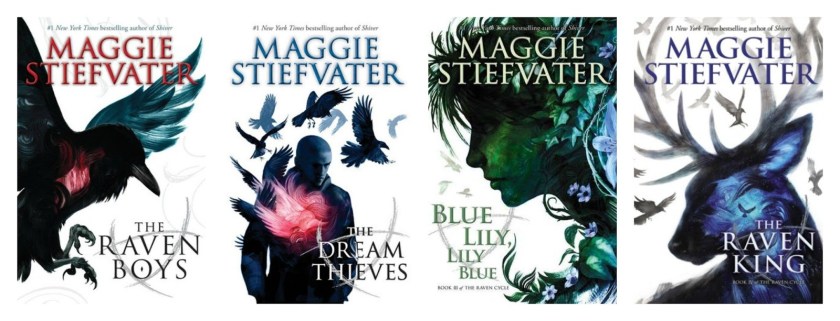
Book Review: The Raven Boys Series – Maggie Stiefvater

Sometimes, you come across a book series that defies categories and genres, and is such a mishmash of storylines and plots, that you find yourself scratching your head and asking: WHAT THE HELL AM I READING?!


This is exactly the kind of reaction this book series evoked in me. There are four books in this series, and usually I expect to be confused and muddled for the first two books when the author is laying all the groundwork for the reveals, plot twists and payoffs that are sure to occur in the last book. HOWEVER. When you’re already reading the last book and you’re still not quite sure what it is you’re reading and what the point of the story is, I think that’s a different story altogether.


Every year on St Mark’s Eve, Blue Sargent stands guard with her psychic mum as a group of soon-to-be dead people walk along the “corpse road”. She herself has never seen them until this year, when one of them sees and speaks directly to her. Her clairvoyant aunt told her that there is only one reason for the dead to speak directly to a non-seer: either Blue is this person’s true love or she killed him herself. Now this is relevant because all her life, Blue has been told that if she kisses her true love, he will die (how tragic!). She doesn’t know who this guy is, all she has is a whisper of a name: Gansey.


Gansey (Richard Campbell Gansey III, to be more exact) is no stranger to dying. In fact, he’d already died once before after being stung by a hornet and he was brought back to life by the power of the “ley line”, which I imagine to be some kind of psychic force field. As he laid there dying, a voice whispered in his ear that he will be brought back to life because at that very same moment, someone else died on the ley line when they weren’t supposed to. This second shot at life led to an obsession over all things related to the ley line, specifically the quest to find ‘The Raven King”, whom legend supposes to be buried in the heart of this line. Legend also has it that whoever finds this tomb will be granted one favour by The Raven King.


Through a series of chance and twists of fate, Blue finds herself increasingly involved with Gansey and the rest of the Raven Boys: Adam, the poor scholar who struggles with jealousy, pride and the need to make it in the world in his own terms and without receiving any hand-outs from his rich friends; Ronan, a troubled kid who found his father bludgeoned to death and who plays a more central role to this story than I initially thought; and Noah, who’s just…always there…until he isn’t. In this already complicated mix of characters we add Blue’s family: her psychic Mom and her psychic friends who all live in 300 Fox Way.


I’m telling you, there are a lot of things that go down in this series. There’s the mysterious power of dreams; a subplot that to me is a metaphoric plea to save the environment; demonic activity; death and resurrection; romance. It is FULL ON. In the hands of any other author, I think this book would have been rubbish. However, Maggie’s prose is so extremely readable that I found myself just going along with it no matter how confused I became. I’ve taken some memorable quotes from Pinterest and included them in this blog post (all credits to the original users who posted them, none of these are mine!).


I enjoyed the story and I enjoyed the character developments. I enjoyed reading the strength of the friendship among the four Raven Boys, the kind that won’t let you go into the dark alone, and the kind that will save you even if what you need saving from is yourself. I loved that Blue is a sensible heroine and that I didn’t feel the need to smack her, and I love that the romance developed gradually and didn’t feel forced or rushed in any way. I also loved that the romance aspect never overshadowed the supernatural element of the story. There was also a surprising twist -and additional romantic entanglement – that I would not have seen coming but was unfortunately spoiled for me because I read the bloody Goodreads reviews (%#£!!!!) but which I think readers will enjoy.


Does Gansey die? Is he Blue’s true love? Will she ever get to kiss anyone? Does this ragtag group of misfits ever find The Raven King? All those questions will be answered after a lot of talking and reading and posturing. I warn readers that I am of the opinion that I finished this series only out of sheer curiosity and stubbornness, and that some readers may find it tedious and pointless (adjectives that I used at some point while reading the books). Nevertheless, YA fans may still want to check it out. I also just have to point out that the cover art is incredibly beautiful.


If you agree or disagree with the review, feel free to leave comments below. I would love to know what everyone else thought about this series!

Posted in Books, Religion, Reviews

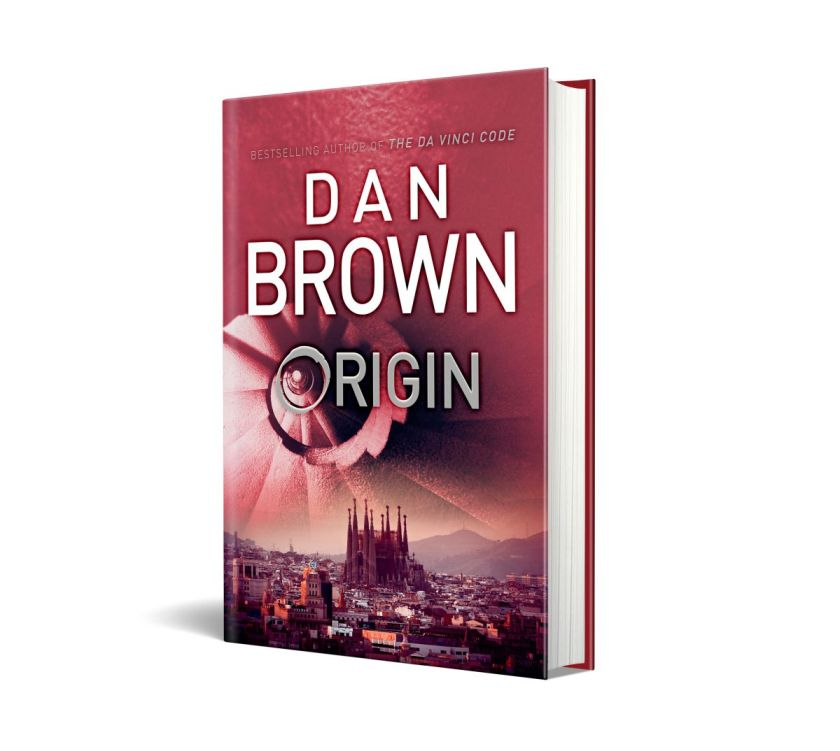
Book Review: Origin – Dan Brown

It’s weirdly fitting that I finished and am reviewing this book on Sunday, a day known to Christians the world over as the day of the Lord.


The premise of the book is quite simple and a little bit formulaic in my opinion. But hey, if it ain’t broke don’t fix it right? Dan Brown has sold millions of copies of these Robert Langdon books that he should know by now that if you just stick to the plan, you’re good.


As per usual Robert Langdon is invited to an event, this time by his former student, Edmond Kirsch, an influential man who is renowned in the scientific world as a pioneer and a prophet. Edmond has promised to reveal a groundbreaking research that will rock the very foundation of religious belief. However, things take a sinister turn before he can do so and it is up to Robert, and inevitably a female companion, to search through the clues left by this enigmatic man so that his final discovery can be broadcasted to the world, facing challenges and threats to their existence along the way of course.


I’m not kidding when I say these books are formulaic: European city as a setting (Barcelona), art (Gaudi) the usual anti-religion tirade, symbols and clues, plot twists, heck, Robert’s female sidekick this time around – Ambra Vidal – is made out of the same mold as Vittoria, Sophie and that girl from Inferno (although we were spared the romantic undertones this time around, thank God. I don’t think Tom Hanks can handle any more romantic entanglements.)


There are so many themes to explore that I think I’ll just dive right into it. There will be minor spoilers along the way, although I’ll try to keep them to a minimum and readers will still get to enjoy the element of surprise brought about by a good plot twist, although I saw this one coming from a mile away.

Where did we come from?

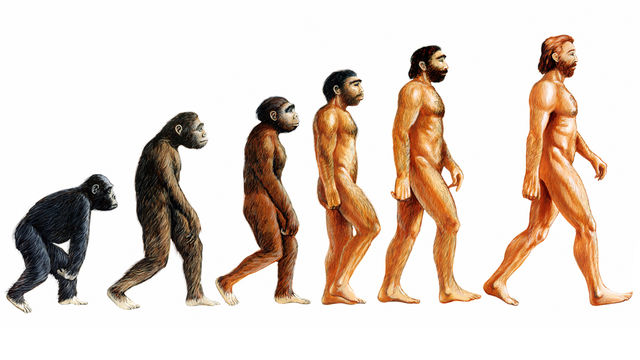
This is the question that divides religion and science. Despite attempts to unify them and despite calls for us to see the hand of God behind scientific advancements, it seems like they can’t bridge the big divide of the question of where man came from. Of course, everyone is familiar with the story of Genesis and God creating Adam and Eve from his own likeness. Equally familiar is Charles Darwin’s theory of evolution: man’s journey from homo Habilis to Homo sapiens brought about by the survival instinct.


garden-of-eden-fall-of-manevolution-in-motion


One of our more enterprising teachers attempted to begin an intelligent and stimulating dialogue back when I was in high school by having us students debate these two theories. I think she greatly underestimated how fervent some people’s religious beliefs are and that some of the students will take things personally. Religion is a deeply personal thing. It forms a major part of your entire belief system and influences how you see and interpret the world. For most of us, religion is learned from a loved one and part of what keeps us believing in it is the influence of that loved one. For example, I may not necessarily have as strong a faith as I did when I was younger and I have come to believe that there is a big flaw in my belief system, but I still go to church every Sunday out of fear of disappointing my mum, who is deeply religious.


Anyway, the debate ended in fights and tears especially on the side of those who were for Creationism. I think someone did raise the question about whether you would prefer to believe you evolved from a chimpanzee or whether you’d rather believe you were a special creation of a divine being. This was over 15 years ago so I’ve forgotten which side I was on but I distinctly remember being able to see and understand both sides of the story and my eventual take on it is that we should all stop asking this inane question and just move on with our lives.

I mean, does it really matter where we came from? Shouldn’t it be enough that we exist and therefore should make that existence meaningful? So many debates raging and wars being waged over a pointless question. I agree with what one character in this book said, no matter what scientific discoveries people come up with, people will still cling to their faith because at the end of the day, everyone needs to believe in a higher power.


Religion versus Science

Religion is intangible. The bible itself praises people who “do not see and yet choose to believe”. Christianity requires a leap of faith and – paradoxically -a suspension of belief. We believe in a God who loves us so much that He gave us his only son, birthed through divine conception. This son, Jesus, then gave up his life on the cross to save us from our sins and was resurrected three days after and brought into heaven. Those are two of the mysteries of our faith that we’ve chosen to base our entire belief system on.

A scientific mind will just lose the plot when faced with this belief system because it just. doesn’t. make. any. sense. I agree. Its got plot holes the size of the hole on the ozone layer. The entire system can be destroyed by a few questions and all we’re inevitably left with is our faith. Science, and the scientific method, meanwhile is based on facts and experiments. Its based on research and results that are tangible and reproducible. So when scientists discover something that directly contradicts religion, it’s a big deal because you know they will be armed with facts to back up their claims, like the theory of evolution.

I don’t know, really. I don’t understand the war between religion and science because I think there’s room for both to co-exist in the world. I think the world needs both in equal amounts. Take medicine, for example. I am both a Catholic and a medical personnel and I am able to reconcile both my faith and my medical knowledge when I deal with my patients. When a family member is sick, I find myself both recommending drugs and treatment that I think will help and keeping them in my prayers. When I found out my dad had high PSA levels (one of the indicators of prostate cancer) I spent one day researching all there is to know about it and then spent the night praying the rosary. I don’t see the disparity or the divide.

I remember being deeply offended one day when a surgeon I was working with said that religion is for the weak. I disagree. Yes, from a certain narrow-minded perspective it may seem as if some people use religion as a crutch because they can’t bear to take responsibility for their own destinies. But equally, there is something beautiful about how it is also used as a moral compass to temper man’s often irresponsible foray into things he’s not ready for.


Where are we going?

During his big reveal, Edmond said that the question of where we came from is not as important as where he thought we were going. I am heading into spoiler territory so do stop reading if you’ve not read the book yet. Although I think this won’t change your reading experience, I have to post an obligatory

SPOILER ALERT!!!!

Anyway, apparently Edmond’s experiments and his work on a super-computer has allowed him to predict man’s future and he predicts that in 50 or so years, man as we know it would be extinct and a whole new race will take over. According to Edmond technology will eventually consume man, pacing the way for a “new and better race of human beings”.

Now, this is clearly Dan Brown’s way of admonishing the current society’s obsession with technology and its true, in a way. Everything we need, we can access at the touch of our fingers. Need information? Find it on google. Need directions? Use the maps on your phone. Need to tell the world something new about yourself? Post a status on Facebook. Need to contact your mum from halfway around the world? Call her on FaceTime. Bombs can now be triggered remotely. There is a theory that we are entering a new dawn where technological warfare will replace traditional warfare. The advancement of technology can now be measured in terms of years instead of decades. Apple comes up with a newer, bigger, better and more advanced smart phone every year and it needs to do so in order to stay one step ahead of its competitors.

In a sense, the world is moving too fast that this plot twist really didn’t surprise me as much. One thing I found really clever is that, if you really pay attention, the book’s narrative and action was really in keeping with this theme of technology taking over. For example, Robert Langdon I felt played less of a role here because he had someone (or something) else doing the work for him (you’ll notice this if you read the book). Even the central mystery being solved was in keeping with this theme.


Despite that, it’s still the little things…

I was quite ready to give this book a negative review. I found it to be too long and I never really engaged with the story the way I did with what I still argue is Dan Brown’s best work (Angels and Demons). However, it was the little pockets of human interaction amidst all the chaos and startling new ideas that really turned the tide for me: a father’s love for his son, a son’s wish to live up to his father’s expectations, the thrill of falling in love and the purest love between two people who were destined to never share their feelings to the world because their world is not ready for it yet. But there is hope that one day it will be.

Again, I don’t know if this contrast was intentional but I, for one, found it really poignant. It’s in keeping with the message of the book I guess, that the human capacity for tolerance and compassion will keep us from being overrun by the dangers of powerful technology and that is what keeps Edmond Kirsch hopeful about the future.


….and finally.

I know this is a pretty long review, I apologise but it is a rather long book (again, this is one of my major complaints about this. Find a better editor, Danny boy!) but it’s certainly worth reading, especially if you’ve been a fan all these years.

My advice is to take everything with a pinch of salt. Ultimately, it doesn’t matter what other people tell you anyway. You believe what you believe and you are entitled to that. Live and let live, people.


Happy Sunday, blabbaholics and bookworms alike!


Posted in Lifestyle, london, Music, Reviews

A Love Letter to Music and Intimate Concert Venues

I recently went to an intimate concert at the O2 Academy in Brixton and I just have to write about what a great venue it was and how awesome small venues are in general. Granted, it was a Killers concert so I would have had a great time regardless of where it was held. But really, I found it amazing that a band who had sold out arenas like Wembley can also choose to have a gig in a comparatively small venue.

This isn’t the first time I’ve attended gigs like these. In the past couple of years, I’ve bought tickets to watch underrated artists who may not sell out big venues but whom I really really like, maybe because I listened to their music repeatedly while I was growing up. Like Vonda Shepard for example, who rose to fame while playing songs on the hit show Ally McBeal.

I remember I used to “borrow” (and I use this term loosely) CDs from my uncle Tony’s extensive collection and hers was one of the albums that I would take up with me to my room. I was a very emotional and angsty teenager and I spent quite a lot of time in my room agonising over my teenage crushes and Vonda’s songs were (and still are) the perfect accompaniment to that. I dare any woman from my generation to tell me they didn’t cry their heart out to Baby Don’t You Break My Heart Slow.

​ 
 

I saw Vonda at Bush Hall, Sheperd’s Bush last year. When my sister and I were queuing up for this show, I was half afraid that we were being scammed because from the outside the place did not look like any concert venue I’ve ever been to before. There wasn’t even a proper entryway, just a tiny door that resembled the stage door that theatre performers go in and out of. But you should never judge a book by its cover I guess because the inside was absolutely beautiful. This hall looked more like it was used for wedding receptions and parties rather than concerts. It was awesome. And at 26£ per ticket, it was a freakin’ steal! 
Anyway, here are some of the other reasons why small venues are A-awesome:

You don’t need to queue for an entire day just to get a good view

So the last time I went to see The Killers at Hyde Park, I queued at 6am, had an egg mcmuffin at around 10 and nothing else thereafter, had small sips of water throughout the day so that I wouldn’t have to go to the toilet for the next 12 hours and eventually I got to see Brandon and co. at around 9pm. The reason I did all that is because I am only just over 5 feet on a good day and I wanted a good view of the band for my first Killers concert. So I was right up the front during the show but it came at the price of my sanity.

For their concert at Brixton, I came at 7 after having had a good pub dinner and a couple of rounds of drinks, bought another round of drinks at the actual venue before eventually grabbing a spot and still managed to have a good view of the band. O2 Brixton also has an amazing sloping floor so even if you’re at the back and vertically challenged like me, you’ll still be able to see Brandon Mr. Brightside Flowers. 

If you do make the effort to come early, the view is spectacular

The Apple Music Festival is held annually at The Roundhouse, another intimate venue. I’ve been lucky enough that even though I’ve never won any tickets for that festival (you can’t buy tickets, you have to enter a lottery because its completely free), I’ve had at least one friend win tickets 3 years in a row and they’ve taken me along as their plus one. I’ve seen Robin Thicke, Avicii, Little Mix and the last One Direction concert before the band broke up. I queued up pretty early for 1D because I am a not-so-closet directioner and as a result I got to see them up close. I had to battle it out with what seemed like hundreds of tweens though; at one point I thought a stampede would break out! I never want to go through it again, but it was still a great experience.

The acoustics are awesome

Because its such a small venue, the sound is kind of contained and so to me the acoustics sounded so much better than it does in the bigger venues.


You feel one with the crowd and with the artist

Gavin Degraw is one of those underrated artists who should be more famous than they are. His songs got me through college. One song in particular has special meaning to me and is the reason why I bought tickets to see him perform TWICE  in one year, both times at the O2 Forum in Kentish Town. The first time I saw him live, More Than Anyone was not on the setlist and I was crushed. I was determined to keep watching him until he played it. And when he did, I really truly felt like he was singing it just  for me.


Absolutely beautiful. Thousands of people all singing along to my favourite song. I do love it when artists do sing-alongs during concerts. I saw Kodaline at Hammersmith Apollo and they asked the crowd to sing along to The One, which is actually the one song of theirs that I know the words to. I love the lyrics to this song. 

​​

I think for most artists, having people sing along to your songs is a form of validation. I mean, take The Killers for example. Every time they play Mr. Brightside, Brandon hardly needs to sing because the audience does it for him:


​  

I’ve said it before and I’ll say it again, hearing Mr. Brightside live is akin to a religous experience. Lol

In some cases, you pay peanuts for the tickets.

The Killers tickets were a bit pricey at 68£ but most of the tickets for the shows I’ve seen hardly ever go over 30£. If you’re a music lover like me, that’s nothing. Also, when I’m watching lesser known artists, not only are the tickets cheaper but there’s also a guarantee that everyone who’s there are true fans which makes for a better experience.

So yeah, I’m sure arena concerts and festivals are awesome in their own way and they’ll have an entirely different atmosphere because of the huge crowds and the number of other activities that you can do. But I personally am spoiled for life after having been to shows like these. Although I wouldn’t turn my nose up if someone were to offer me, say, free Glastonbury tickets. I just want to celebrate music and all joys that come with it. 

Posted in Books, relationships, Reviews, romance

In Death: An Ode to JD Robb

There is something to be said about an author who’s got enough mileage to keep a series – for the most part – fresh and interesting 44 books in, with number 45 having just been released this week.

JD Robb, who first gained fame as a romance author under the pen name of Nora Roberts, has earned the title of being one of the most prolific writers in the business. She still publishes under both pseudonyms and she’s able to churn out at least two books a year. While her works as Nora have declined in quality in my own personal opinion, the In Death series under JD Robb feels a little bit like the energiser bunny: its just going to keep on going until her fingers get too arthritic to type on a keyboard.

I read the first book in the series a little over a year ago when I was looking for a good whodunit crime novel. I picked up Origin in Death based on the recommendation of one of my Goodreads friends who has a reputation for always giving honest reviews. I was quite surprised that she praised this one so highly as she’s usually into alternate universes, post-apocalyptic settings and dystopia. In comparison, this “futuristic” series seemed a little bit tame for her taste. Despite the fact that its set about 60 years in the future in a still-recognisable but crazier version of New York City, and despite the fact that there are crazy gadgets and new inventions to help solve crime, at the heart of it this is a procedural crime novel with Lieutenant Eve Dallas of the NYPD at its centre.

Eve and Roarke

Eve is an enigma even to herself. She’s very methodical and all about the job. She cares and stands for her victims and seems to take any crime in her city personally, which is what makes her so good. You can tell she’s been through something nightmarish in her past because she’s so closed off to other people and have very little, if any, time for a personal life. She is the job and the job is what makes her. While working a case, she meets the equally enigmatic and ultra-charming billionaire Roarke (no last name just like Madonna), who was initially one of the suspects in the case she was working on but who she later develops a romantic relationship with.

The mysteries in each book are interesting in and of themselves; I would probably have followed the series for that reason alone. But the backstory and the character development, as well as seeing how a relationship between two people with such a complicated and traumatic past developed into a strong partnership, is what makes the series special. Seeing how Eve Dallas, respected lieutenant with a reputation for solving crimes, navigates the minefield of marriage and is thoroughly discombobulated by her role as a wife provided a comedic fodder for all the other heavy stuff going on in the books. It was also amazing to see how she developed close relationships with other people and how she somehow allowed them in to her world as a result of opening herself up to Roarke. So much so that she finds herself pleasantly surprised that she’s managed to create a family after years and years of being alone.

The Supporting Cast

The supporting characters in the story also enrich the experience of reading the books. We’re introduced to Delia Peabody, Detective McNab, the other detectives at Cop Central, Chief Morris, Captain Feeney, the chief of police, Summerset the butler, Mavis Freestone, even Galahad the cat – they all matter. JD Robb somehow wrote the series in such a way that she gradually made the readers care for each and every one of them one book at a time. But the lynchpin of the books is really Eve. Its such a joy to see her journey as a character. Which isn’t to say that she can’t be annoying. I sometimes get so annoyed by how she sees things in black and white, which is probably why Roarke is perfect for her because he is all about the shades of grey in between.

44 books in the series!

I read all 37 books in this series one after the other. I’m quite happy that I didn’t know just how many books there were when I started because it might have put me off starting. As it is, I’m sure I made Amazon Kindle really happy when I bought all the published books back then in a bundle, it probably cost me a little over 200 quid but its money well spent. Not all the books were great and there were some that I was tempted not to finish because I was bored, but then those books would surprise me with a scene between Eve and Roarke that would just move their relationship forward and it would make up for an otherwise mediocre story. That’s how JD Robb hooks you: if the story is a dud, the character development makes up for it. If there’s nothing new to explore in terms of the main characters, you sink your claws into a good old-fashioned crime mystery. Its the perfect one-two punch.

Unfortunately, none of the books can be read as a standalone. I mean, when you start reading the first three or four you’d just want to carry on anyway. And okay, you can probably pick one book at random and still enjoy a good mystery but the payoff really is in knowing the characters and the history of how they all came to be what they are to each other. Some books are all about the payoff, with returning characters from previous books or a previous issue that was brought up in one of the previous books but was never fully explored. So I wouldn’t recommend not reading them in order. I would recommend borrowing them from someone who’s got the full collection rather than buying them like I did. There are some highlights in the series and you can go visit my page for my top ten favourite In Death books to check out my personal favourites.

All in all, reading books from this series always feels like visiting an old friend. Its always great to escape into Eve and Roarke’s world for a while and to pray that in these troubled times we live in where the world is literally going to hell in a hand basket, there would be someone like her in our police force who will stand for the good people of London the way Eve Dallas does for New York.

More power to JD Robb and may the books keep coming!


Posted in Books, relationships, Reviews, Uncategorized, Women's literature

Book Review: Where’d You Go Bernadette? – Maria Semple

Its funny. 

We never really think of our parents as being people. To us, they’re Mum and Dad: the people who know all the answers, who can make the scary stuff go away, who will always be there to bandage every hurt and dress every wound. Growing up, we see them as these superhuman creatures that we can always count on to catch us when we fall. That’s how I saw my parents anyway.

Until I moved away from home and embarked on my own “adulting” journey, it never occured to me to think of my parents as two people who are probably just as scared as I am about the responsibilities that come with being an adult. No one really gives you a set of instructions for these things; there’s no set objectives like, year one month one: set up a bank account: month two, make sure you have health insurance. You kind of figure it out as you go along. You fake it and hope to God you make it (I imagine parenthood would be the same but magnified because you’re actually responsible for another person).

So why am I waxing lyrical about mum and dad? Well, that’s kind of the key theme of ‘Where’d You Go, Bernadette?’. Bernadette Fox is many things to different people: an architectural legend,a brilliant but troubled wife, an uncooperative neighbor and the menace of the local parent-teacher association. But to her daughter Bee, she’s really just Mum. Until Bernadette disappears and Bee has to put together the pieces of her mum’s life to really see the dynamic, complex woman beneath the Mommy mask.

This book is told primarily through letters sent to and from Bernadette and letters about Bernadette. These letters were collected by Bee to help her in search for her mum. I always find this epistolary style quite clever. Its hard to give a full picture of a story through letters and emails but I think if done well, it really works. I actually think this novel loses a lot of steam once we got to the more linear kind of narration (from Bee’s point of view).

The blurb is a little bit misleading because I thought the journey to ‘finding’ Bernadette would involve a lot more, well, travelling. Especially to places that relate to her past. I thought the novel would explore her past more because there was a big build up about this ‘terrible thing’ that happened to her which had such a huge impact on her life. But the actual search for Bernadette seemed a bit anti-climactic. It was pretty obvious where she went and I never really understood why she went there, why she stayed and if anything was resolved at the end of the book.

I’m not sure if we readers are meant to sympathise (and like) the titular character. She seemed a mess to me and while I can see why that is, I think I agree with her husband when he said that we shouldn’t let past failures keep us from trying again. Its how you pick yourself up after a fall that matters after all. While this book is intended to be a satire or a dark comedy, I think Bernadette is a really tragic figure in that she never really realises all her potential. Towards the end its hinted that there might be some resolution but as I said, it wasn’t really clear. Maybe this is intentional, I don’t know. I’ve never really been a fan of books that leave the ending open to interpretation.

What’s evident throughout though is the fact that as troubled as Bernadette may have been, no one can doubt that she tried to be a good mother to Bee. She allowed Bee to be whoever she wanted to be and made everything an adventure. She probably wasn’t the most dependable of parents, but she was there when it mattered. It reminded me of that episode of Modern Family when one character said that 80% of the time, being a good parent meant simply showing up.

So yeah, this book was a good read. While I never really connected to the characters or the plot, I can’t deny that I was thouroughly entertained. Maria Semple’s writing style just flows and I would definitely read her other books if the plot sounds interesting. 

I’d like to end this post with a photo of my mum. Whatever else she may have been in the past, I am happy for the combination of whatever fulfilled dreams, untold failures and twists of fate that led her to being my mama, the wind beneath my wings, my anchor and my rock. 😘

Posted in Books, Children's Literature, Fantasy, Reviews

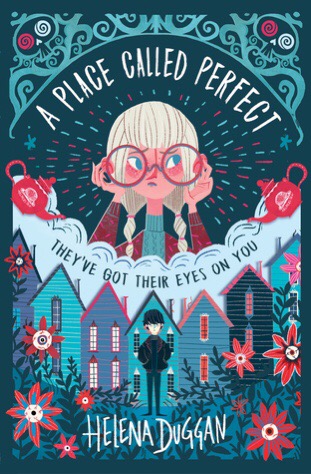
Who Says We Have To Grow Up? Book Review: A Place Called Perfect – Helena Duggan

Three years ago, I went to visit my aunt and uncle in Florida and we drove to Orlando over the weekend to visit Walt Disney World. It was one of the best weekends of my life. I challenge any kid in the world to top my level of excitement when it comes to all things Disney. I rode and sang along to ‘Its A Small a World’; I cheered when Mickey Mouse came strolling down Main Street USA; I queued up to take my photo with the Disney Princesses and I shed a tear during the fireworks display. I loved it

Walt Disney once said that the trouble with the world is that too many people grow up. We lose our sense of wonder; we start to become cynical and lose our faith in people. We don’t believe in magic anymore (I mean, it probably doesn’t exist but isn’t it amazing to think about the possibility?), even Santa has lost his luster. We work 9-5 jobs that barely motivate us, we get bogged down with our day-to-day routine and life becomes a series of to-do lists. We lose our imaginations. 

This is what Helena Duggan is trying to tell us in her book called ‘A Place Called Perfect’. Violet Brown moved to Perfect (yes, that’s the name of the town) with her parents and she immediately knows something isn’t right. Everyone is the same: robotic, smiling faces all obssessed with being perfect. Little by little, her parents start to change and she seems to be the only one concerned. Then she meets Boy and learns about the town’s dark secrets and the cost of too much perfection. 

This is technically a children’s book but so what? Harry Potter started out as a children’s book and look how that turned out. Besides, I see nothing wrong with reading children’s books. I love the simplicity; I love inhabiting a child’s mind even if its just for a little while because there’s something so pure about how a child sees the world. I think as adults we tend to overcomplicate things so that we lose sight of what really matters – joy, love, family. 

The author is trying to warn us about the dangers of stamping out a child’s individuality. We should let children play, we should encourage them to imagine how things could be instead of telling them to be content with how things are. I think its a wonderful thing to grow up feeling like there’s infinite possibilities in the   world. Most of all, I think Ms Duggan is trying to tell us we should allow children the freedom to be who they are.

I gave this book 3 stars because I felt like it could have been longer but that’s just personal preference. The plot itself is perfect and filled with just the right amount of intrigue and twists such that it can be enjoyed by both adults and children. I can imagine this to be a good bedtime reading material and it will certainly create a nice bonding moment between a parent and his/her child. 

Enjoy this book fellow booklovers and don’t ever let anyone tell you we can’t read children’s books. Who says we have to grow up anyway? 

Love, Blabbaholic! Xx

Posted in Books, Classic Literature, Reviews, Uncategorized

Blast From The Past: Book Review – And Then There Were None 

People use the term “classic” to refer to something that transcends generations, a piece of work that remains relevant no matter what decade it is.

 This crime novel from Dame Agatha Christie is a classic in every sense of the word.
The plot is simple. 10 strangers are lured into a secluded island off the coast of Devon by the myseterious U.N. Owen. They started off thinking that it’ll be a nice weekend getaway. Then things take a more sinister turn when, after dinner, a pre-recorded gramophone thingy (I have no idea how a gramophone works) accused them all of being guilty of murder.

All of them denied it of course. There was a plausible explanation behind each accusation. They thought someone was just playing a practical joke…until one of them dies. And then one after the other each member of the party is killed, and the murder method is based on an old nursery rhyme called “Ten Little Soldier Boys.” 

Ten little soldier boys went out to dine; one choked his little self and then there were nine.

Nine little soldier boys sat up very late; one overslept himself and then there were eight.

The remaining guests soon figured out that because of the seclusion of the island and the inability of the boats from the mainland to come across, the murderer could only be one of them. The author did such a great job of creating the atmosphere; one can almost feel the paranoia mounting. Who can you turn to? Who can you trust?

I was amazed that Agatha Christie was able to cram this much action in so few pages. One would think that the characters wouldn’t be as fleshed out because its such a short novel but this actually proves that you don’t need to waste chapters and chapters just to provide someone’s backstory. And this author had 10 characters to contend with! 10 characters represented by 10 figurines of soldier boys in a mantelpiece, each figurine disappearing after one dies. 

Its clear early on that the motive for the murders is related to some form of justice being metted out. But justice for whom? Is the murderer related to one of the purported victims? Is there a common thread to all the victims that would eventually lead to the identity of the killer? These were some of the thoughts running through my head. It felt a little bit like watching the tv show Lost, which tells you how far ahead of its time this novel was. 

My boss told me that the stage adaptation of this book is also quite good. I can see how this would be great as a play; I sometimes felt while reading it that it comes across as a screenplay more than an actual novel. It still doesn’t take away from the genius of it. I was left completely confounded and guessing until the very end. I went so far as to postulate the theory that these people were really all one person, like they were part of “UN Owen”‘s dissociative personality just like in that film with John Cusack called Identity (spoiler alert: they’re not. There really is a murderer!)

I would recommend this book to all lovers of mystery, especially for those who want to have a good read but get bored with long, drawn-out stories. This is for you!